The One-Sentence Test
I was sitting with an author who has a genuinely great book in her, and she spent five solid minutes walking me through it. Gorgeous language, big ideas, every sentence polished to a shine. When she finally came up for air, I asked her the one question I always ask.
"Would a stranger know who this is for?"
She froze, and honestly I don't blame her. That same silence shows up in almost every similar conversation I have. Brilliant authors, sitting on real messages, who still can't tell me in one clean sentence who the book is actually for.
They go deep because they can't wait to unpack how it's for every person in the world in some way. But they get stuck over explaining when a simple sentence can do the whole trick.
Confusion is what quietly murders most book marketing. Talented authors with real work ethic still sink because the reader can't tell what they're being handed. If somebody hears your idea once and can't repeat it back to you, your message isn't cooked yet, and posting more often only spreads the fog faster.
The best proof I know of is Donald Miller, the guy behind Building a StoryBrand: Clarify Your Message So Customers Will Listen. His whole empire runs on one uncomfortable idea. Readers reward whatever they understand the fastest, and brilliance they have to decode just sits there gathering dust.
Miller built his name coaching people toward clarity, and that's the punch in the mouth most nonfiction authors keep ducking. Most of them get foggy for one simple reason. They're too close to their own genius. They want to explain the whole framework, the whole backstory, the whole philosophy, the entire "why this matters to society" TED Talk running on a loop in their head.
Meanwhile their reader is asking something a whole lot simpler. Is this for me? What does it fix? Why should I care today?
Miller has said it plainly for years. The mistake experts make is making the whole thing about themselves, when nobody cares about your brand until you help them solve their problem. So he flipped the script. Your reader is the hero, your book is the guide, and your message is the bridge that carries one person from their problem over to your solution. So retire the museum tour and the 19-tab Google Doc of your brilliance, and build the bridge.
The One-Sentence Test
There's a fast way to test whether your message can walk on its own two legs. One sentence, four blanks:
My book helps ______ who struggle with ______ finally ______ without ______.
Like this:
My book helps first-time managers who struggle with confidence finally lead hard conversations without sounding fake or forceful.
Read that to a stranger and they'll know exactly who it's for, what hurts, and what changes. That's the entire game. So go say yours out loud to someone who owes you nothing, and watch their face. If they hand it back to you clean, you're ready to roll. If they stumble, you just found your homework for the week, and trust me, it's worth a hundred more carousels.
From My Desk
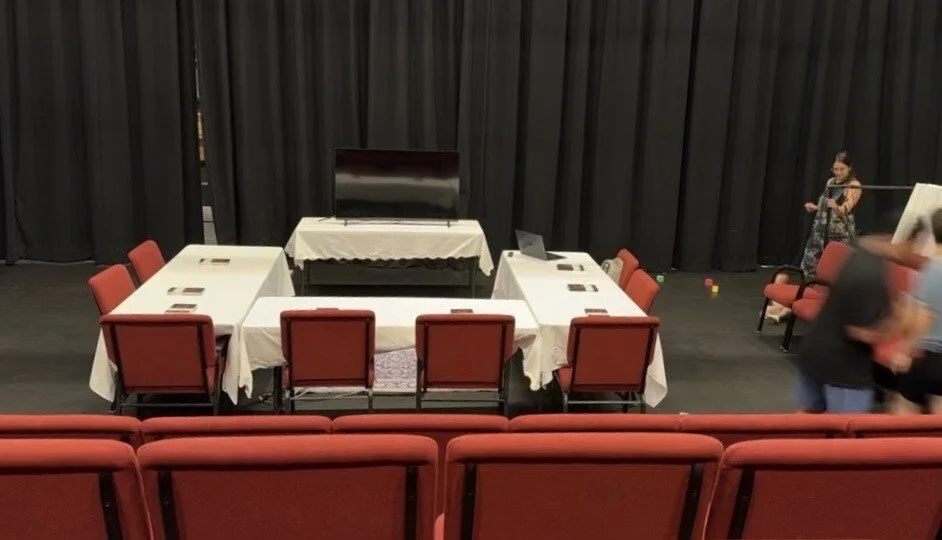
Quick one from behind the curtain. I'm buried in and developing slides for Author X this week, sorting out the venue and loading up the van, and I'm genuinely fired up for what's coming. We got the venue dialed up and we should be ready to rumble by this weekend to some practice runs before everyone shows up Friday the 26th
Press Play
Two new conversations dropped on the podcast this week, and both landed right on top of this whole clarity thing without me even planning it.
How Creatives Break In, with Jonathan Hsu We get into why the book was only ever the starting line, and what it really takes to turn your expertise and your hard-won experience into the kind of trust people can feel. Clarify the message, keep showing up, and let the book carry you into speaking, consulting, and rooms you haven't been invited to yet. One thing to take with you: treat the book as proof of the work and a doorway into everything that comes after it. Watch here.
Business Is Slow? Do This Instead of Panicking, with Kristin Clark who runs Elite Content Creation and wrote Your Book: Written, Published, and Sold, and she makes a case I wish more people believed. A slow season is the best window you'll ever get to fix what's under the hood, tighten the systems, clean up the positioning, and pour a foundation that can hold the next wave when it shows up. One thing to take with you: the thought you're scared to say out loud is usually the one your audience needs most. Watch here.
When You're Ready, Here's How I Can Help
If you're done yelling into the algorithm and you want a message that actually lands, pick your lane:
Power Pack Pro. Clarify your brand, build your site, and lock down your positioning.
Power Pack Boost. Weekly content strategy, video scripts, lead systems, and real platform growth.
Power Pack Ultra. A done-for-you content engine, podcast-ready video, and full visibility support.
DM me or just reply to this email and we'll build you something real, something rooted in who you actually are. That's the only kind that ever lasts.
Practice patience and gratitude.
Hussein