The Camera, Mic & Apps Every Author Needs
I was on my third podcast recording of the day.
Prepared. Energized. Ready to have a real conversation.
The guest logged on late. His admin had set up the booking because his new book was coming out and he needed the press. He came on mid-conversation with someone else in the room, held up a finger at me like I was the one interrupting him, and then proceeded to eat chips. Literally crunching chips into the mic while I sat there smiling into the camera wondering what I was looking at.
He was in what looked like a dark conference room closet. His mic was crackling. His video kept cutting out. And within the first sixty seconds he asked me how long this was going to take.
I held my punches. At the time I was working for someone else and this was my job. So I smiled, I kept it professional, I wrapped the episode in about twenty minutes because I genuinely could not stand being in that conversation, and I moved on.
But here is what I wanted to say to him then. And what I will say now because I run my own company and I can.
Show some respect. To yourself and to the people taking time out of their day to support you and your work.
That host, that interviewer, that podcast, those listeners, they are doing you a favor. They are giving you access to their audience. They are putting their credibility behind your name. The least you can do is show up like you give a damn.
Today I think carefully about who I bring onto my own show because I want real conversations. I want to learn something. I want to genuinely help promote the person sitting virtually across from me. That only works when both people show up ready.
And showing up ready starts before you ever open your mouth. It starts with your gear.
Next week I am going to do a full deep dive on what authors need to know about being a great podcast guest, how to carry a conversation, how to add value, how to make a host want to have you back. That is a whole newsletter on its own.
This week I want to talk about the equipment. The camera, the mic, the apps, the setup. Everything a serious author needs to stop showing up like an afterthought.
Let's get into it.
Why This Matters More Than Most Authors Realize
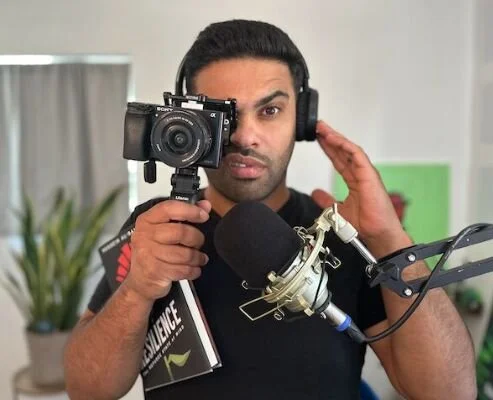
I work with nonfiction authors, coaches, consultants, and experts every day. People who have genuinely important ideas. People who have put years into developing expertise that could help thousands of readers if it reached them.
And one of the most consistent patterns I see, one of the most preventable ways authors undercut themselves, is showing up online like their presence doesn't matter.
Bad audio, laptop webcam, blurred background virtual backgrounds that make your hair look like it's been cut out with safety scissors. No eye contact because the camera is in the wrong position. Looking down, looking sideways, looking anywhere but at the person you're supposedly connecting with.
We judge, all of us, It's not shallow, it's human.
Our brains read environments and production quality as proxies for professionalism and credibility before a single word is processed. When you show up on a podcast or a Zoom call with bad gear and a thoughtless setup, you are communicating something about yourself whether you intend to or not.
You are communicating: I didn't think this was worth preparing for.
And if you're asking people to trust you with their time, their attention, and eventually their money, that is a message you cannot afford to send.
The Background Problem
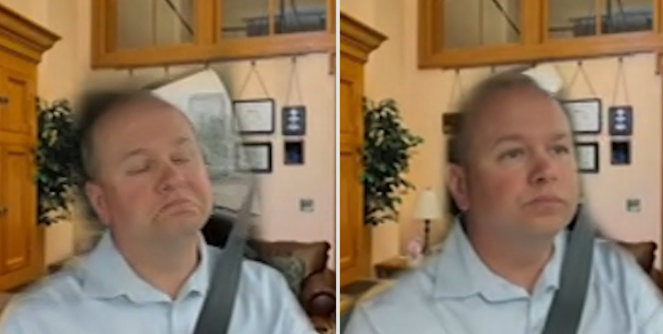
Let's start with what's behind you because it's the first thing anyone sees.
A lot of people blur their background or use a virtual background. I understand the impulse. You're in a spare bedroom or a corner of your kitchen or a home office that isn't quite ready for prime time and you think the blur hides that. It doesn't. It just makes it obvious you're hiding something. The edges are always slightly off. The lighting never quite matches. It looks like what it is, a workaround.
Now I'm not here to shame anyone who is genuinely working from a difficult space. You work with what you have. But if you are a professional asking people to invest thousands of dollars in working with you, the minimum you owe your audience is an environment that feels intentional.
It does not have to be expensive. It does not have to be a professional studio. It has to feel like you thought about it.
My own background is a bookshelf. Books I've read, books I've worked on with clients, a few that spark conversation when someone spots the spine. Is it perfect? Honestly, sometimes I think it's a little busy. Books can pull the eye away from your face and in video the face is everything. I go back and forth on simplifying it.
But I've kept it because it's on brand. It tells you immediately, before I say a word, exactly what world I live in. I work with authors. Books are my world. That background does work for me passively every single call, every video, every podcast thumbnail.
That is what a good background does. It communicates something true about you without requiring you to say it.
So the question is not what looks nice. The question is: what is true about me, and how do I make my environment reflect that? Clean it up. Add one intentional element, a bookshelf, a plant, a piece of art that means something to you. Make it feel like someone thoughtful lives and works there.
Because someone does.
Sound Is Everything
Audio wins almost every time. And here is why that matters so much specifically for authors building a platform through podcasts:
You can watch a video with no sound and read the captions. It is not ideal but it works. People do it on their phones in public all the time.
But try listening to a podcast with bad audio for forty-five minutes. Crackling. Room echo. That hollow, distant sound of someone recording on a laptop mic from across the room. It is genuinely painful. Listeners tap out. Not because the content is bad, your content might be excellent, but because their ears are working too hard to extract it.
Sound is intimacy. Good audio makes people feel close to you. It creates the sensation of being in the same room. Bad audio creates distance, and distance kills trust before your ideas even have a chance to land.
This is why a real mic is not optional if you are serious about building a platform. Not a USB desktop mic sitting on your desk vibrating every time you type. A proper mic on a boom arm, positioned correctly, isolating your voice from the room.
The Rode mic I use and recommend is linked at rising-authors.com/gear along with two boom arm options. The boom arm alone will change your audio quality because it gets the mic off the desk surface. No more keyboard vibrations, no more desk bumps in the recording, mic positioned close to your mouth without being in the frame.
The Camera Setup
Camera placement is one of those things that seems minor until you see the difference side by side.
If your camera is below your chin, which is where your laptop camera sits when your laptop is on your desk, you are being looked up at. You look small. You look like you are looming. It is an unflattering angle and more importantly it signals immediately that you are using a laptop webcam, which signals that you did not invest in your setup.
Eye level means the person on the other side of the call feels like they are actually talking to you. Direct. Present. Intentional.
The fastest fix is a laptop stand. Elevate the laptop until the camera is at eye level. It costs almost nothing and the visual difference is immediate. The stand I use is linked at rising-authors.com/gear.
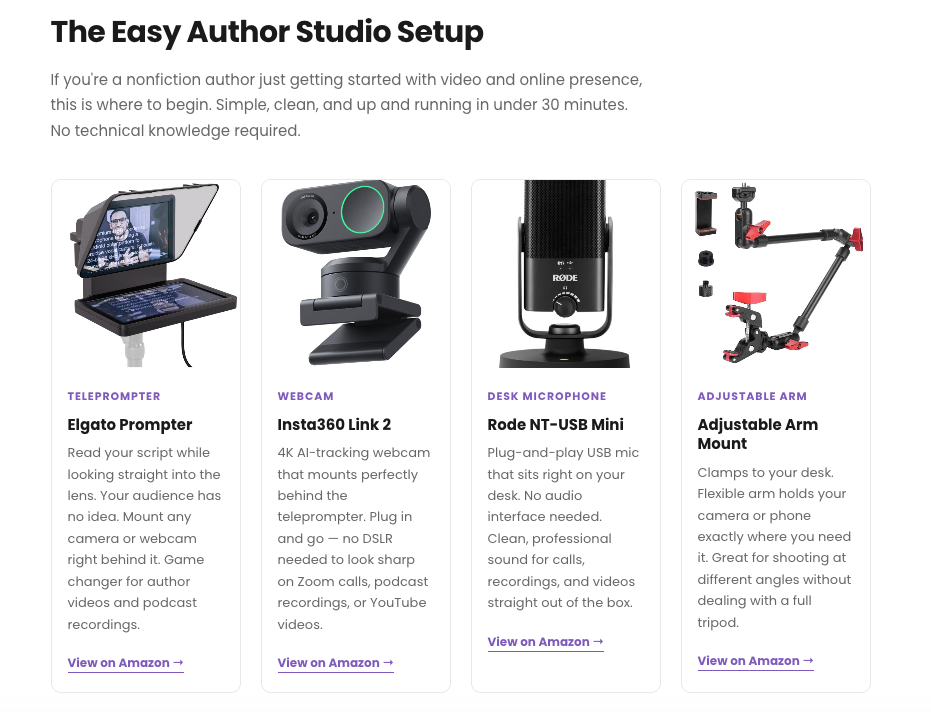
The next level is a dedicated camera, a real mirrorless or DSLR connected to your computer via a Cam Link. This is what I use personally. The image quality is in a different league from any webcam. If you are doing regular podcast interviews, YouTube content, or video calls with high-value clients and prospects, this investment pays for itself fast. Everything you need for that setup, the camera, the power adapter, the Cam Link 4K, and the adapter, is on the gear page.
If you are not ready for that investment yet, there is a solid budget camera option on the page as well. Start there. Just get off the laptop webcam.
And pick up the adjustable arm too. It gives you flexibility to position your camera or phone exactly where you need it without fighting a fixed mount.
Lighting
Here is something most people do not know: a decent camera with great lighting will beat an expensive camera with bad lighting almost every time.
Lighting is what separates looking like you accidentally recorded something from looking like you meant it.
The basics: soft light, from slightly in front of you, slightly above eye level. No harsh shadows across your face. No window behind you blowing out the image and turning you into a silhouette. No overhead ceiling light casting shadows downward that make you look exhausted.
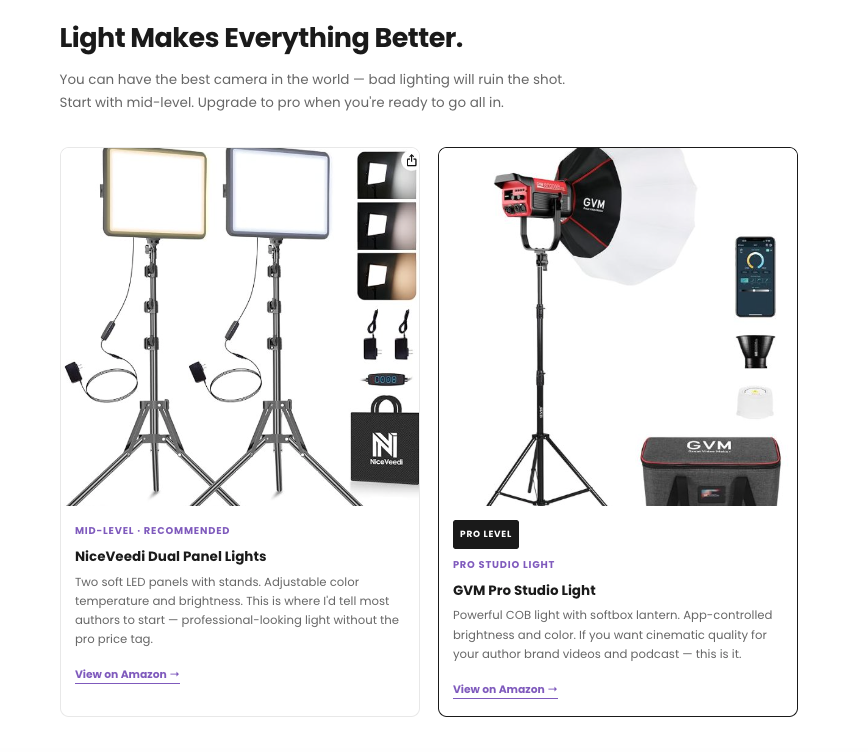
A good ring light or key light solves all of this. The pro lighting option I use is on the gear page. It is not complicated to set up. Position it in front of you, dial it to a color temperature that matches your space, and the difference in how you look on camera is dramatic.
Good lighting also means your camera does not have to work as hard. The sensor has more to work with. The image is sharper and cleaner. Everything improves downstream when the light is right.
The Apps That Make It All Work
Gear without the right software is only half the equation. Here is what I use and why each one matters.
Zoom is still the standard for client calls and discovery conversations. Know it well. Log in five minutes early. Test your audio and video before every call. Do not be the person troubleshooting their settings while the host waits.
StreamYard is for live streaming and recording with guests. Clean interface, reliable, and it lets you pull in guests without requiring them to download anything. If you are doing any kind of live content or virtual events this is worth knowing.
Riverside is for podcast recording specifically. The reason it matters: Riverside records each person's audio locally on their own machine and then uploads the high-quality file. This means even if someone's internet connection hiccups during the conversation, the audio file is clean. No compression artifacts from a bad connection. This is the professional standard for serious podcast production.
Google Calendar sounds basic, it is not. Your calendar is infrastructure. How you manage your time, how you structure your call days, how you protect your deep work, all of it runs through your calendar. Use it intentionally. Block your call days. Block your deep work days. Do not let your schedule be something that happens to you.
Cal.com handles scheduling without the back and forth. Share your link, people book directly into your available windows, it syncs to your calendar. If you are still scheduling calls manually over email you are wasting time you cannot get back. The free option is amazing!
Trello manages projects and client work. Visual, simple, keeps everything organized so nothing falls through the cracks. If your business is growing and you are managing multiple clients or content workstreams this keeps you from being scattered.
All of these apps are linked and detailed at rising-authors.com/gear.
The Teleprompter
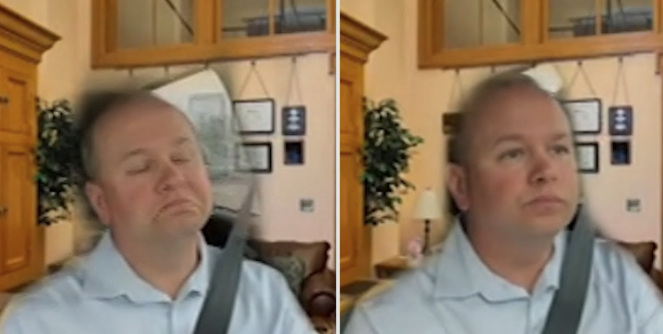
One more tool that most authors overlook entirely: a teleprompter.
If you are creating any kind of scripted video content, YouTube, social clips, book trailers, course material, a teleprompter changes everything. You maintain eye contact with the camera while reading your script. You look confident and prepared instead of looking off to the side where your notes are. You deliver your message cleanly without the stumbles and resets of trying to memorize long passages.
The one I use sits right in front of the lens so your eyes are looking directly into the camera while you read. The teleprompter is on the gear page.
The Real Investment
None of this gear is particularly expensive relative to what it does for your credibility. A few hundred dollars thoughtfully invested in tools that will serve you for years.
But the real investment is not the money. It is the decision to take your online presence seriously.
Your mic is visible. Your camera angle is visible. Your background is visible. Whether you show up on a podcast with a bad connection and a laptop mic, that is visible too.
The small moments matter more than people think. The fact that you logged on early and the room was ready. The way your audio sounds. Whether your background looks like you thought about it. These are experiences you are creating for the other person. They are either delighting people or letting them down.
My client and recent podcast guest Mark Maynard, ACC is a great example of going all in. He spent years developing his book, landed an agent, secured a book deal, hired us to build his online presence, launched a new website, and has invested seriously into developing his signature talk as he steps into his role as a speaker. Every layer intentional.
We talk about all of it in our latest episode of the Rising Authors Experience.
Hussein