Nobody Stood In Line For My Book. Here's What I Did Instead.
I'm trying to think long and hard about the last book I was excited to buy from an author I follow online...
I did get Day Trading Attention the day it came out. I watch and follow Gary Vee more so in the past than I do now. However his take on attention is crucial to my marketing work and I need this to help my clients with it as well.
This brings me to my question to you.
When is the last time you jumped out of bed and thought, I cannot wait to go pick up that new leadership book today?
Maybe every now and then you see something that spikes your interest. I'm willing to bet though it's from someone you follow online though and not just a random person.
And yet authors spend months writing a book, weeks planning a launch, and then act surprised when the world doesn't show up like it's a movie premiere.
The book goes live. They post about it twice. Maybe three times if they're feeling bold. And then the silence sets in.
Not because the book is bad. Because nobody was warmed up for it.
Here's what I've learned working with authors and being one myself. A launch is not an announcement. A launch is a payoff. And a payoff only lands when there was a buildup first.
If you're planning to launch a book this fall or winter and you haven't started warming your audience yet, you need to start today. Not next month. Today.
Let me show you how to think about this and give you the exact email sequence I'd use.
Part One: The 60-Day Warmup
Two months before your book drops, your audience should start feeling something. Not pressure to buy. Genuine curiosity about what you've been building and why it matters.
Here's how to think about the eight weeks before launch.
Weeks 1 and 2: Open the story.
Why did you write this book? Not the polished answer you give on podcasts. The real one. What happened in your life that made this thing necessary? Who did you write it for and why them? What did it cost you?
People don't buy books. They buy into people. Give them a reason to invest in you before you ever ask them to invest in the book.
Weeks 3 and 4: Name the problem.
Talk about the exact pain your book was written to solve. Not in an abstract way. In the real language your reader uses when they describe their own struggle. You're not talking about the book yet. You're holding up a mirror and saying, I see you. I wrote something for this exact situation.
Weeks 5 and 6: Start the bridge.
Share one real idea from inside the book. One story. One framework. Give away something that stands on its own. The best authors understand that giving away the content doesn't hurt the sale. It creates it. When someone reads your email and thinks, if this is what they give away for free I need the whole book, that's the bridge working.
Week 7: Create the moment.
This is where you stop thinking small. I'll come back to this in a minute because this part is where most authors leave everything on the table.
Week 8: Launch week.
By now your audience is warm. They've been on the journey with you. The ask doesn't feel like an ask. It feels like the obvious next step.
Part Two: Think Differently About Launch Week
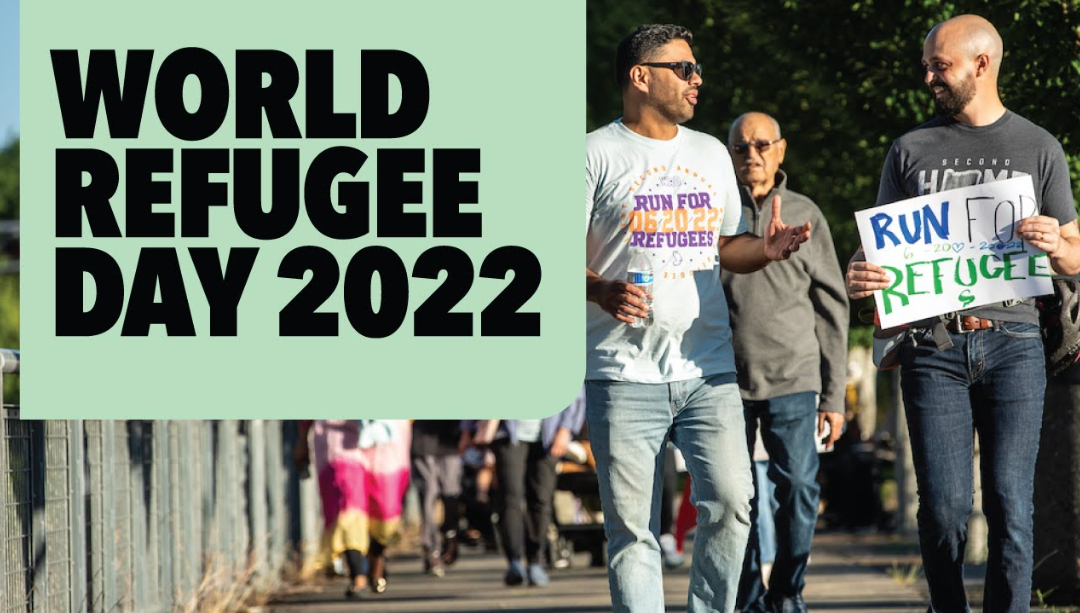
When I first launch my book it was June of 2021 people were still wearing masks, let alone stand in line at a bookstore to get my book. Also, I wasn't really sure how to approach my book launch.
I was pretty much on my own to promote and market my book. So I had an idea to do a run/walk during a long run i did in early 2021 I figured it would be a fun way to get people outside and toss my book in a t shirt pack that I can sell to then give back with.
So after a bunch of emails, lot sof promotion we gathered hundreds of people to walk around the waterfront everyone got a shirt and a book when they paid to be a part of it. Then we donated proceeds to a non profit that further helped refugees.
On the second year it got even bigger and I decided to make a full video about the whole event. I hope this merely inspires how you think about what you do when thinking about your book launch.
You can watch that video here:
Most authors plan a launch event the same way. A virtual party nobody shows up to. A few Instagram stories. Maybe a signing at a bookstore that feels awkward and empty.
Here's the better question. What would make someone actually show up?
Not for the book necessarily. For the experience. For the moment. For something worth telling someone about later.
Let me give you a real example of how I think about this.
Say you're launching a leadership book. You go find a local burger spot or a coffee shop, somewhere that's part of your community, and you talk to the owner. You say, I want to do something that puts your business in front of new people and ties into something we both care about.
You pay the owner two thousand dollars. That buys however many orders of fries or cups of coffee that gets you.
You set up a deal: the first one hundred people who show up on launch Friday get something free. You make a few short videos with the owner in the week before launch.
You tell the story of why that place matters to the neighborhood. You pitch the local news not with "author releases book" but with "local author partners with restaurant to give back to the community on launch day."
Now what have you done?
You gave a small business owner real exposure. You created a community moment. You gave the news an actual story to cover. You have video content for two weeks. And you showed your audience that your book isn't just a product. It's a reflection of what you actually believe in.
That is leadership. Not writing about it in a book. Doing it in public where people can see it happen.
Some other versions of this same idea. Partner with a nonprofit that connects to your message and donate a portion of launch week sales. Show up at an event that already exists in your community instead of asking people to come to something new. Host a free workshop at a local library and give everything away, let the book be what people pick up on the way out.
The question is not how do I promote my book. The question is what can I do in my community that my book would be proud to be attached to.
Part Three: Let's Be Honest About Fame
I want to say something that most people in this industry won't say to you.
Fame from a book is rare. Way rarer than anyone admits.
I'll put twenty dollars on the fact that if I asked ten random people on the street if they know who Seth Godin is, eight of them would have no idea. Seth Godin. One of the most influential marketing minds alive. Wrote over twenty books. Shaped how entire generations think about business.
Eight out of ten have never heard of him.
That's Seth Godin.
So if you're launching your first or second nonfiction book expecting it to make you famous, I need you to reset that expectation. Not to discourage you. To protect you from the bitterness that comes when the timeline doesn't match the dream.
What a book can actually do is powerful. It can position you as the credible expert in any room you walk into. It opens doors to stages, boardrooms, and consulting relationships that were closed before you had it. It gives your audience something they can hold, share, and pass to someone who needs it.
The book is not the destination. It's the most credible thing you've ever said about the work you do.
Build the author. Do the work in public. Let the book be the evidence.
The 6-Email Sequence
Send these starting eight weeks before your launch date. take these, tweka them, add some whatever you need these are meant to be a warm up for you to get unstuck.
Email 1 — Week 8 Out Subject: I need to tell you something I've never said publicly
This is your origin email. The real reason you wrote this book. Not the polished version. The moment that made it necessary. The failure, the conversation, the thing that happened that made you realize this needed to exist. Tell that story fully. End with one line: the book is coming in X weeks and I wanted you to be the first to know.
No link. No ask. Just the truth.
Email 2 — Week 6 Out Subject: The problem nobody in your industry is talking about
Name the exact problem your book was written to solve. Use the language your reader would use to describe it, not your framework language, not your polished version. The raw version. Tell them you spent years trying to solve this before you figured out what was actually true. Tell them the book is what you wish you'd had when you were in the middle of it.
One call to action: reply and tell me if this sounds familiar. You're building engagement before the ask.
Email 3 — Week 4 Out Subject: Here's one thing from the book. Use it today.
Give away a real idea from inside the manuscript. A framework. A story. A tool. Something useful on its own. Don't tease it, deliver it. At the end, tell them the book is full of moments like this and it drops in X weeks. No hard sell. Let the value speak.
Email 4 — Week 2 Out Subject: Something is happening on launch day and I want you there
Introduce the launch moment you've created. The community event. The local partnership. Whatever real thing you've built around this day. Tell the story behind it and why you chose it. Include early access details if you have them. Make it feel like something worth showing up for.
Email 5 — Launch Day Subject: It's here.
Keep this one short and personal. The book is live. Here is the link. Here is what it is for and who it changes things for. Give them one clear thing to do: buy it, share it, or tell one person who needs it. Not everyone will buy. Everyone can refer.
Email 6 — One Week After Launch Subject: What happened last week surprised me
Tell them what launch week actually looked like. The community moment. Something unexpected. Make it human and real. Then make one more ask: if you haven't grabbed the book yet here is why now still matters. Remind them who it's for and what it actually does for that person.
Close with real gratitude. Not the transaction kind. You wrote a book. People are going to read it and something is going to shift for them. Say that out loud.
Six emails. Eight weeks. A real community moment built into launch week. And a way of thinking about your launch that moves you from author with a product to author with a presence.
The authors who build careers are not always the ones with the best books. They are the ones who show up the longest.
Hussein