No One Wakes Up Wanting Your Book. Do This Instead.
For the past two weeks I've been studying someone who has been so inspirational to me in how to create experiences.
A modern day Disney in my opinion
His name is Jesse Cole. He owns the Savannah Bananas, yes, the team with the yellow tuxedo, the dancing players, and a waitlist of over a million people for tickets. I was watching interviews after starting to read his book a few weeks back and in a recent talk, he said something that hit me so hard.
"Attention beats marketing 1000% of the time."
Not marketing plans. Attention plans. His team meets every week not to ask "how do we promote the game?" but "what are 10 to 15 things we can do tonight that have never happened on a baseball field before?"
Sit with that for a second. Then let's break down why this matters for you as an author and expert.
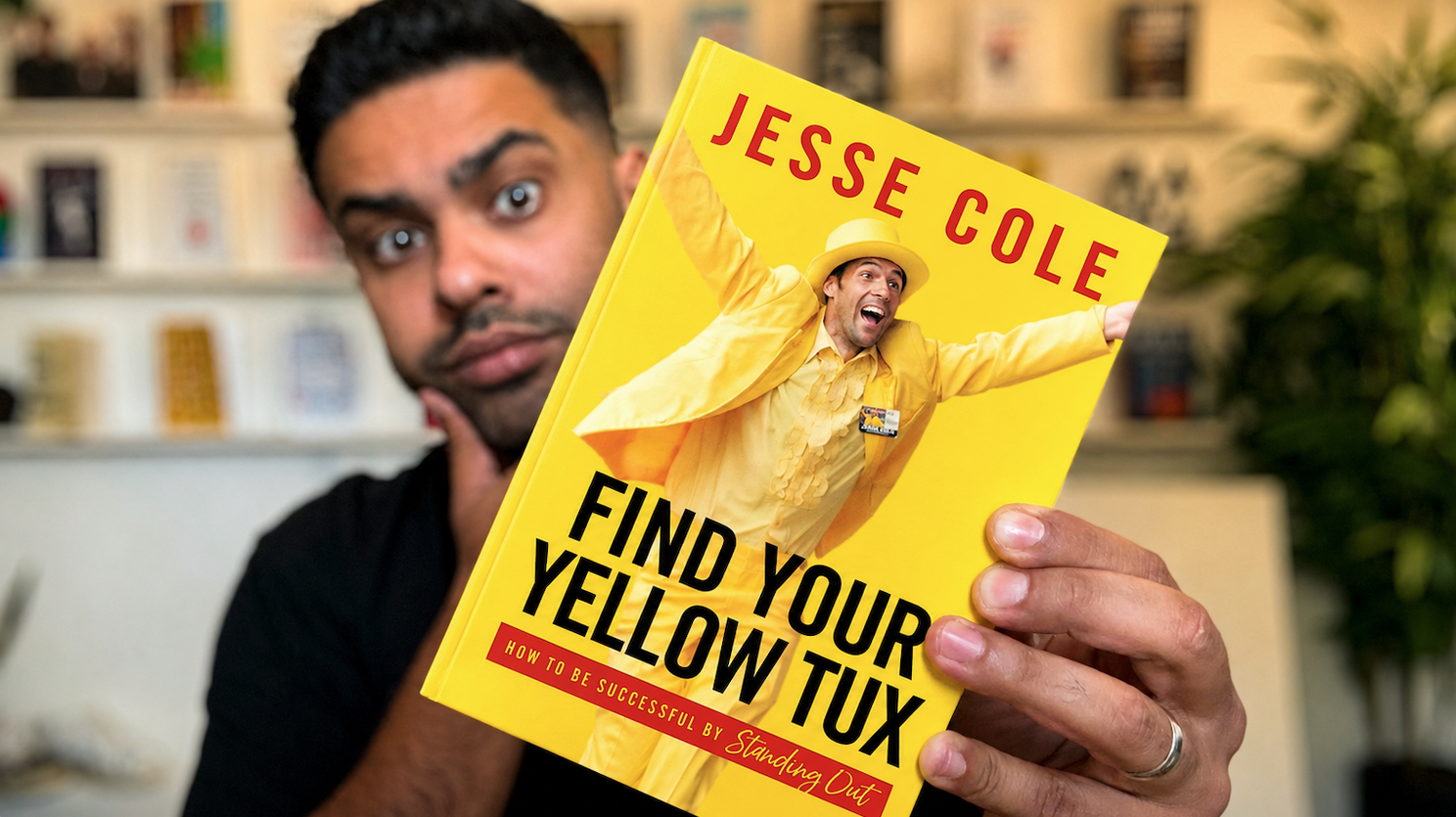
Find Your Yellow Tux - Book by Jesse Cole
1. Whatever's normal, do the exact opposite
Jesse learned this from Alan Fadden, author of Innovation on Demand. When Fadden launched his book, he didn't do a normal launch. He bought an entire retail store in Minneapolis and turned it into a bookstore that sold only one book, his own.
He shelved his single book in every section: Business. Self-Help. History. And he hung a sign that said shoplifting was encouraged, because he wanted his book in as many hands as possible.
He got some insane results from this radical concept. A full-page feature in People magazine. National news and ton of books sold.
Meanwhile, most authors do the normal launch: the Amazon push, the "It's here!" post, the podcast tour of three to five podcasts that won't actually move the needle. everyone else is doing, which is fine but honestly unless you're going on big podcasts you are not moving huge units.
Normal gets normal results.
If your book launch looks like every other book launch, expect what every other author gets, a spike, then silence.
2. You don't need a marketing plan. You need an attention plan.
Marketing asks: How do I promote what I have? Attention asks: What could I do that people can't help but talk about?
Those are fundamentally different questions. The first one produces content. The second one produces stories, and stories are the only thing people actually share.
For the Bananas, that's Dolce & Banana underwear (which sells by the thousands), a horse head race, a "messy baby" bit, and a living piñata that Jesse admits was an HR disaster.
Most of these are ridiculous. Some failed spectacularly. That's the point.
3. Success is a function of experiments
Jesse borrows this from Jeff Bezos, who has said Amazon's success comes down to how many experiments they run — per year, per month, per week, per day.
The Bananas try 10–15 new things every single game night. Jesse says 9 to 13 of them fail miserably. That's a 60–85% failure rate — on purpose.
His mantra: the more you do, the more you learn. And sometimes you have to get through the messy to get to the great.
Most authors run one experiment per year (the launch) and treat every failure as a verdict on their worth. The Bananas run a dozen experiments every night and treat every failure as tuition.
4. One experiment can become your identity
Here's my favorite story from the talk.
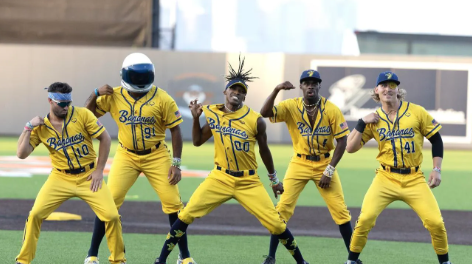
The very first Bananas experiment was getting players to dance. Nobody wanted to do it, they were good ballplayers and terrible dancers. Jesse had to fight for buy-in, drag them to learn choreography.
Game one: they danced, the crowd cheered. Game two: the dancing players were signing the most autographs. Game three: Jesse is walking through the stands and overhears a wife tell her husband — shut up, honey, they're about to dance.
That one uncomfortable experiment led to the Banana Nanas (a senior citizen dance team), a breakdancing coach, a twerking umpire — and eventually a full-page New York Times story. Not about the team. About the dance culture.
One experiment became the brand.
You have no idea which of your experiments becomes your "dance." That's exactly why you have to run them.
5. The hardest part: killing what's merely good
The Bananas used to run haunted stadiums, a "running of the bananas," and a morning beer festival (tagline: you can't drink all day if you don't start in the morning). People who came had the time of their lives.
Only 94 people showed up to the beer festival.
So they killed it. They killed all the events, even the great ones, to focus on one thing: being the greatest show in sports.
Experiments don't just tell you what to add. They tell you what to cut. Good-but-small is a distraction from great.
So what does this mean for you?
You're not running a baseball team. But you are competing for attention in a world drowning in "normal."
Ask yourself this week:
What's the one experiment you could run that no one in your space is doing?
Maybe it's a launch that looks nothing like a launch. Maybe it's a piece of content you're slightly embarrassed to post. Maybe it's your version of the dancing players — the thing your audience would tell their spouse to shut up and watch.
Run it small. Expect it to fail. Run another one.
Because normal gets normal results, and you didn't write a book to be normal.
7 attention experiments, from meh to WOW
Fair warning: these are not the best ideas by any means nor do they promise big wins. The first few you can pull off this weekend. The last few need a team, a budget, or a partner with an audience.
Ideas range from meh to wow. Execution is everything. A "meh" idea executed brilliantly beats a "wow" idea executed halfway, every single time.
The city-wide book heist. Hide 100 signed copies across your city with clues posted daily on social. Each book contains a golden ticket — one wins a full strategy day with you. You're not selling a book anymore; you're running a treasure hunt.
The movie-premiere launch. Rent a small theater for one night. Red carpet, a 2-minute "book trailer" on the big screen, popcorn, photographer. Your book launch becomes an event people dress up for — and every attendee posts it.
The 24-hour livestream read. Read your entire book live, cover to cover, with guest experts dropping in every hour to react to chapters. Grueling? Yes. But "the author who read his whole book on a livestream" is a sentence people repeat.
Debate your harshest critic — on stage. Find the person who most disagrees with your book's thesis and invite them to a public, recorded debate. Terrifying. Magnetic. Nobody scrolls past a fair fight.
The book truck. Rent an ice cream truck for a weekend, wrap it in your book cover, and drive it to office parks and campuses handing out free copies with the jingle playing. Hire one videographer to ride along. That footage is a month of content.
The give-away-everything documentary. Hire a small film crew for one day and give away 1,000 copies in 12 hours — hand to hand, with a rule that each person has to tell you the problem they're hoping the book solves. The documentary of those conversations becomes more valuable than the sales you "lost."
The world-record attempt. Tie a Guinness World Record attempt to your book's topic — most people journaling simultaneously, longest continuous leadership lesson, biggest group negotiation exercise. Records come with built-in press hooks, and "author attempts world record" is a headline local news can't resist. Even a failed attempt is a story.
These are just super random ideas, I'm sure you've thought of some wild ones that really resonate with you and excite you. And if you want a partner in executing it, reach out. Let's make something creative and fun.
P.S. If you want help building your own "attention plan" instead of another marketing plan, that's literally what we do at Rising Authors. Book a call here.