Confessions Of An Author Who Hated Self-Promotion
When my book came out, I had a hundred ideas of what to do with it and no idea which one to start with.
Do I make a list of every podcaster I'd ever listened to and start pitching? Do I run ads? Do I email everyone in my contacts? Do I post about it every day, once a week, never? Do I focus on Amazon, on Goodreads, on LinkedIn, on speaking? Every direction looked like the right one and the wrong one at the same time, and the more I thought about it the more frozen I got.
Things get real for most authors when they finally launch.
It's the morning after the launch, when the confetti is gone and the inbox is quiet and you're standing there with this thing you poured years into and no map for what comes next. I didn't have a guide. I didn't have a system. I just had a book and a head full of conflicting advice and the slow, sinking feeling that I was about to waste the whole thing.
So I did what most authors do when they don't know where to start. I did a little of everything, badly, and then I got tired, and then I went quiet. I told myself I was being thoughtful, being humble, letting the work speak for itself. I was actually just overwhelmed, and "humble" was a nicer word for "stuck."
What finally got me moving wasn't a tactic. It was realizing that self-promotion was never supposed to be about me in the first place. It's about sharing the work. Documenting what I know. Making myself discoverable to the people who were already looking for the thing I'd already made. The minute I stopped thinking of it as promotion and started thinking of it as service through documentation, the gross feeling went away and the work started feeling like the work.
But getting there meant naming the real reasons I was stuck. Not the confidence stuff. The structural stuff. The reasons nobody really talks about because they're not as dramatic as imposter syndrome but they're the ones actually keeping authors invisible.
Here are the five I see the most. From the authors I sit across from at Rising Authors, from the conversations that happen in the parking lot after the conference, and from the questions authors ask me every single week.
1. You don't actually know what you want.
This is the one underneath everything else. You say you want to "get your book out there" or "build a brand" or "grow your platform," but if I asked you to tell me in one sentence exactly what you want your author life to look like a year from now, you'd stall. More speaking gigs? More clients? More books sold? A movie deal? A community? A consulting practice? An email list? They all sound good, and they all pull you in different directions, and so you end up doing a little of everything and nothing well.
You can't build a strategy around "more." You have to pick. Not forever, just for now. Pick the one outcome that would change the most about your life if it happened in the next twelve months, and let everything else become a bonus instead of a competing priority. Clarity isn't a luxury. It's the thing that turns your effort into traction.
2. Your online presence isn't packaged.
This is the one I get asked about more than almost anything else. Authors come to me with a website that says one thing, a LinkedIn that says another, a podcast bio that says a third, an Instagram that hasn't been touched in eight months, and a book cover that doesn't visually match any of it. Every surface is telling a slightly different story about who they are, and the cumulative effect is that nobody can quite figure them out.
Packaging is not vanity. Packaging is the visible promise that you take your own work seriously. Same headshot everywhere. Same one-line description of what you do everywhere. Same colors, same voice, same tagline, same offer. When someone lands on any one of your surfaces and then clicks through to another, the second one should confirm what the first one promised. That's what people read as professionalism. Without it, you're just a collection of half-finished introductions.
3. You don't know what your attraction field is.
This is the question almost no author can answer cleanly: why would someone come to you instead of someone else? Not your credentials. Not your book. Your actual gravitational pull. The thing about you that makes a specific kind of person stop scrolling and lean in.
Most authors haven't done this work because it's uncomfortable. It forces you to pick a lane and a person and a promise, and picking means leaving other options behind. But here's the thing. You already have an attraction field. You're just not naming it, so it's working at ten percent of its strength. Sit down and answer three questions. Who specifically do I help. What specifically do I help them with. What do I believe about it that most people in my space don't. Those three answers, written clearly and repeated everywhere, become the magnet. Without them, you're invisible to the exact people you were built to serve.
4. You have no reach-out strategy and no connection system.
This is the one I get asked about constantly, usually phrased as "how do I get on podcasts." But the real question underneath it is bigger. How do I actually meet the people I need to meet, and how do I keep the relationship alive once I do?
Most authors do this in spasms. They get excited, send fifteen cold pitches in a weekend, hear nothing back, get demoralized, and quit for three months. Then they do it again. That's not a strategy. That's an emotional cycle dressed up as outreach. A real connection system looks like this. A list of the specific people whose attention would actually move your work forward. A regular cadence for reaching out, every week, not in bursts. A genuine reason for the outreach beyond "please put me on your show." A way of staying in touch that isn't transactional. And a follow-up rhythm that doesn't depend on whether you feel like it that day.
The authors who get on the podcasts and into the rooms aren't more talented than you. They have a system. The system is the whole secret.
5. You stop too soon.
This is the one that costs the most and gets talked about the least. You post for a week and nothing happens, so you stop. You pitch ten podcasts and hear back from one, so you quit. You launch a newsletter, send three issues, get fifty subscribers, decide it's not working, and let it die.
Nothing in this work pays off in a week. Or a month. Sometimes not in six months. The compounding only happens for people who keep going past the point where it stopped being exciting and started being just the thing they do. Consistency is not a personality trait. It's a decision you make on a Tuesday when nobody is watching and nothing is working and you do the thing anyway because you said you would. That's the whole game. Almost every author I've watched succeed in the last decade has been less talented than the authors who quit. They just didn't quit.
If you only fix one of these five, fix this one. A mediocre strategy executed for two years beats a brilliant strategy executed for two weeks every single time.
That's the whole shift. None of these are confidence problems. They're orientation problems. You don't need to become a different person, you need a clearer picture of what you want, a packaged way to present it, a magnet that pulls the right people in, a system for reaching the ones who matter, and the discipline to keep doing it after the novelty wears off.
Self-promotion stops feeling gross the minute you realize it was never about you. It's about putting the work where the people who need it can find it, and then doing that on purpose, every week, for as long as it takes.
The work has no mouth. You're the one who has to point at it. And you have to keep pointing.
Speaking of showing up.
I sat down with Katy Hansell on her show last week and told the real version of my story. The book. The refugee state of mind. Why I believe art is resilience and resilience is art. It's one of the more honest conversations I've had on a podcast in a while, and if you want to know where my work actually comes from, this is the one to watch.
Watch the Katy Hansell interview here
And one more.
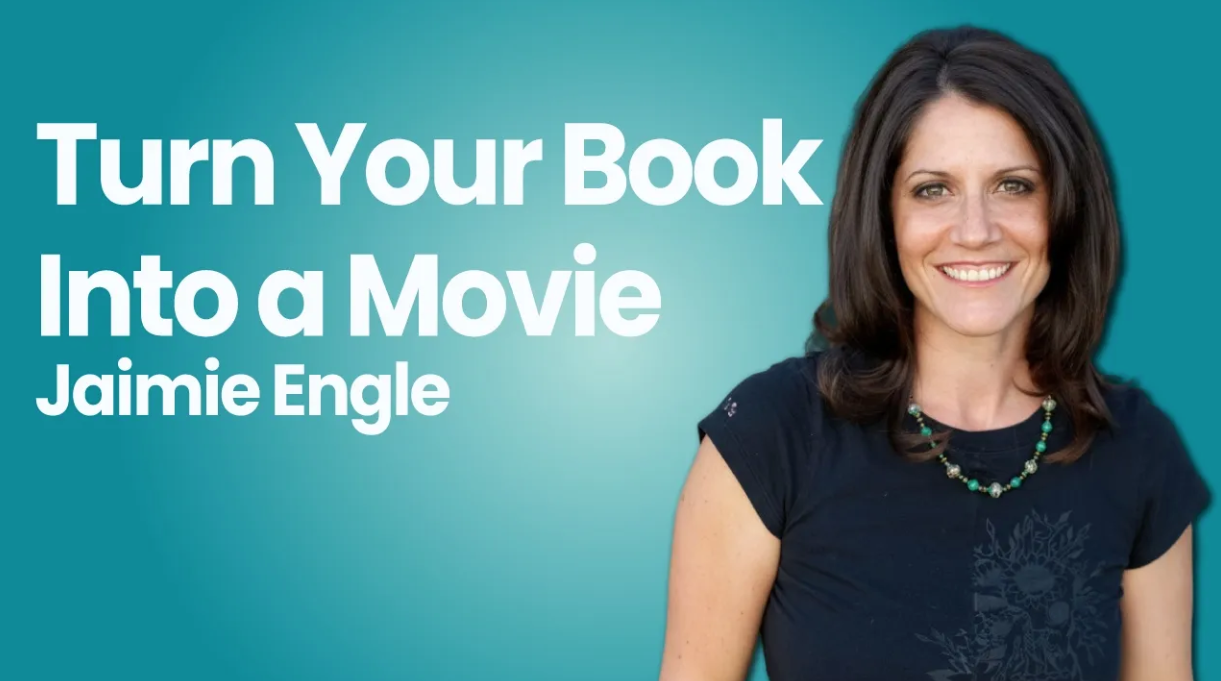
This week on the Rising Author Experience I sat down with author Jaimie Engle to talk about something some authors dream about, which is turning your book into a movie or a show.
It isn't about luck, it's about positioning, relationships, and taking the next step before you feel ready. Jaimie walked me through the actual filmmaking process, how the industry really works, what script writing looks like up close, and how to adapt a book for the screen without losing the soul of it.
No fluff, no Hollywood fantasies, just the process and the mistakes and the moves that actually open doors. If you've ever closed your book and thought this could be a movie, this episode is where you find out what to do next. Watch it here
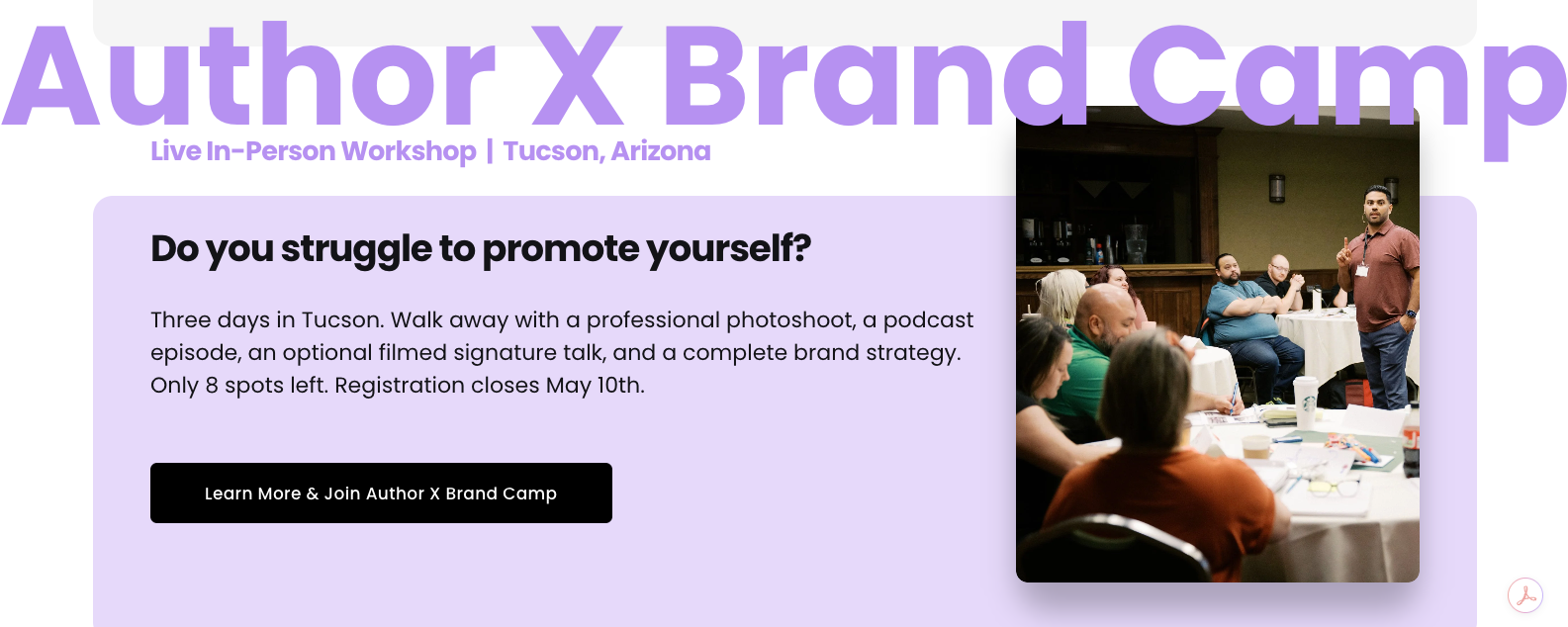
If you're an author or expert who knows you have something worth sharing but can't stand the thought of becoming the kind of person who shares it, I built something for you. It's called Author X Brand Camp.
-Hussein