The Word That Does Your Marketing For You
If I sat across from you right now and asked you to tell me the one word you want to own, the one word you want people to associate with your name long after they've forgotten your book title, I'm willing to bet you would pause, look at me, and say something like "I don't know" or worse, you'd give me three words when I asked for one.
I know because that was me.
I built Rising Authors, launched a podcast, wrote a book, and spent years helping authors grow their platforms and clarify their message, and I never once stopped to seriously ask myself: what is the single word I want to own?
Not my tagline, my niche, my elevator pitch. One word that, when people hear it, they think of me and when they think of me, they immediately feel that word.
I didn't have an answer. And that bothered me more than I expected it to.
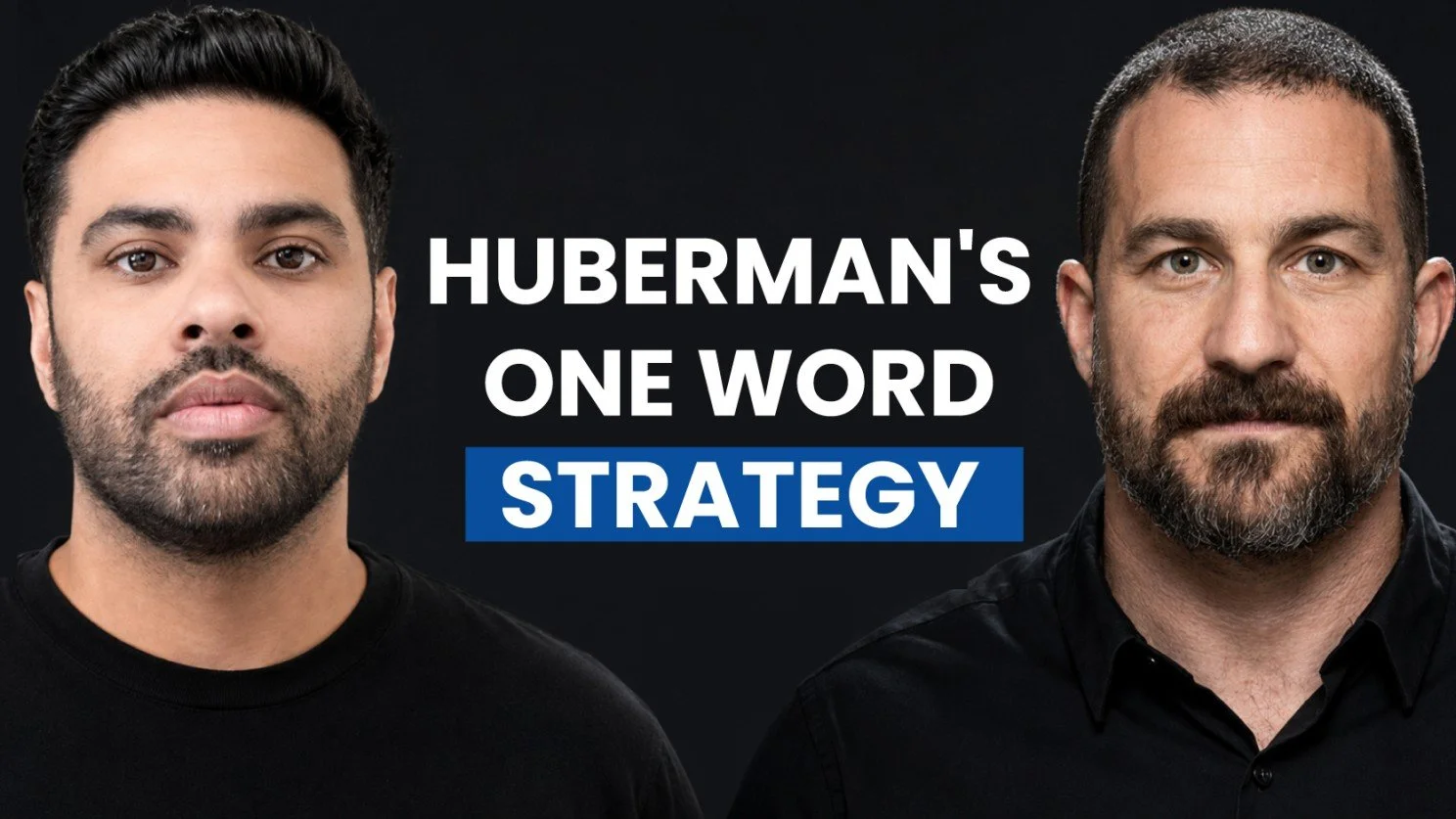
A few weeks ago I went deep on Andrew Huberman. Not his neuroscience, not his sleep research, not the controversies. I studied his brand. I wanted to understand the actual architecture of how a Stanford professor with no media background became one of the most recognized expert voices in the world, with millions of subscribers, a massive newsletter, a content ecosystem that reaches people across every platform, and now a book deal that put his work on shelves everywhere.
I made a whole deep dive on this topic in video format you can watch or listen to here.
What I found was not what I expected.
It was not the production quality, because in the beginning there was none. He recorded in a closet. It was not the credentials, because there are thousands of neuroscientists and most of them have never built anything close to what he built. It was not even the consistency, because plenty of people show up consistently and never break through.
It was one word.
I went back through his early episodes, his interviews, his Instagram posts from years ago, and the same word kept appearing over and over and over again until it stopped feeling like a coincidence and started feeling like a decision.
Then I looked at his book cover.
Right there, front and center, the largest word on the entire cover.
Protocols.
Now let me tell you what that word actually did, because most people look at it and think it's just a label, just a thing he talks about, when really it was the entire strategic foundation of everything he built.
The word "protocols" did something that almost no other word in the health and wellness space was doing at the time. It made neuroscience feel actionable. Not interesting, not educational, not informative, but actionable. A protocol is not a theory you read and think about. It is a prescription you follow. It is something you do today, this morning, with your body, your light exposure, your breathing, your sleep window. It tells you exactly what to do and exactly when to do it, and that feeling of having a tool in your hand rather than just information in your head is what made people come back every single week.
And here is the part that I think is the real genius of it. The word never got old because the applications were infinite. Sleep protocols. Focus protocols. Morning routine protocols. Stress protocols. Exercise protocols. Cold exposure protocols. You could spend a decade creating content under that one word and never run out of material, because the word is the lens, not the topic. The topic changes every episode. The lens stays the same.
He did not own neuroscience. You cannot own an entire field of science. But he owned the idea that neuroscience can be translated into free, specific, repeatable tools that any person can use starting today. That is what "protocols" meant. That is what the word carried every single time someone heard it.
One word. One consistent lens. And from that, an entire world.
I sat with this for a while because I want to be honest with you about how hard this exercise actually is before I give it to you.
When you first try to find your word, the instinct is to resist it. Because choosing one word feels like shrinking. It feels like you are taking everything you know, everything you have studied and experienced and taught and suffered through, and compressing it down into something that cannot possibly hold all of it. And you are right that one word cannot hold everything you know.
But that is not what the word is for.
The word is not a container for your knowledge. It is a lens for your audience. It is the way people file you in their minds when they are not in front of you, when they are recommending you to a friend, when they are searching for someone who does what you do. The human brain does not remember categories and lists and topic clusters. It remembers one clear thing. And if you do not give people that one clear thing, they will either file you under someone else's word or they will not file you at all.
A mile deep and an inch wide. That is where authority actually lives. That is where the brand gets built. That is what most authors are missing when they come to me wondering why their book is not moving, why their content is not converting, why people like their posts but never reach out.
My word is clarity.
Not marketing. Not branding. Not growth strategy. Not online presence. Not book launches. Clarity. Yes I love all of those things but that is the lens I want everything to go through is simple.
Every single author who has ever sat across from me, whether they came to me with a published book or a half-finished manuscript or an idea still living in their head, has had the same fundamental problem underneath all the surface problems. They were not clear. Not clear on who they were trying to reach. Not clear on what transformation they were actually offering. Not clear on what made their perspective different from the twelve other people writing on the same subject. Not clear on what their brand actually stood for beyond the words on the cover.
And what I have learned after years of doing this work is that when an author gets clear, everything else starts to flow downstream. The website stops being something they dread updating and starts actually working. The content starts attracting instead of just performing. The offer stops feeling like a pitch and starts feeling like a natural next step. The speaking gig makes sense. The media inquiry makes sense. The referral makes sense. Everything downstream of clarity gets better when the clarity improves.
That is not just one thing I do. That is the thing that makes everything else I do actually work. And that is why it is the word I want to own.
Now I want to give you an exercise and I want you to actually do it, not save this email and come back to it later, but sit with it right now for five minutes before you move on with your day.
Take a blank piece of paper or open a notes app and write down every word that you think could apply to your work. Do not filter. Do not judge. Just write. Transformation. Courage. Systems. Freedom. Resilience. Clarity. Healing. Power. Trust. Whatever comes up for you, write it down until you have at least ten words on the page.
Then go through each one and ask yourself three questions. Does this word apply to everything I do or just some of it? Does this word say something about what my reader or client gets, not just what I believe in? And could someone who works with me for six months walk away and say yes, that word is exactly what I experienced?
The word that survives all three questions is worth keeping.
Then sit with it for a week. Use it in your content. Say it out loud in conversations. Put it at the top of your website and see if it changes how people respond to you. The right word will not feel like a limitation. It will feel like a relief.
Because the authors who find that word stop trying to be everything to everyone and start becoming something specific to someone who really needs exactly what they offer. And that shift, from broad to specific, from trying to reach everyone to owning something real in the mind of the right person, that is what changes the game.
Not the next book launch. Not the next podcast appearance. Not the next LinkedIn post.
The word.
P.S. My friend Jonathan Hsu just hit number one on Amazon with No Cash, No Contacts, which knocked out one of my all-time favorite business books, The E-Myth. Jonathan wrote it for filmmakers who want to build a real career and business from zero, and the fact that it is sitting above a book that shaped how I think about business tells you everything you need to know about how good it is. If you know someone in the film world, send them the link.
Hussein.