The Problem Isn't Your Message. It's Your Fear of Sharing It.
I walked in, I was greeted with smiles and welcomes then I chose my seat at the table and sat down.
In October of 2019, I flew to Austin to learn how to write my book.
I didn't know a single person there. Twelve strangers and me, sitting in a room for several days, putting our half-formed ideas on the table.
By the end of that week, those strangers knew me better than people I had worked beside for years.
I felt seen. I felt supported. I got feedback to my face, in real time, from people who had read my pages and cared enough to tell me the truth.
That was seven years ago. I still carry it.
I did several more events with that same company. Then, for about three years, something was missing. I kept chasing that feeling in webinars and online courses and Zoom rooms. I never found it.
Here is what I believe. Virtual changed everything for the better. It made learning cheaper, easier to access, and open to people who could never afford to miss work or the hassle of being away from family and booking a flight and a hotel. I am grateful for it.
But virtual cannot give you the room. It cannot give you the person across the table who notices the thing you could not see in your own work. It cannot give you the moment another writer says "that line stopped me" and means it.
In-person is not the affordable option. It is the elevated one. I think we are about to remember that.
So I built my version.
What actually happened in Tucson
This past Thursday, the heat turned up in Tucson, and we started setting up the space for the authors coming to Author X.
I will be honest with you. I thought I might get three to five people to say yes. More than fifteen raised their hands. Eight signed up. Two came close before life got in the way. A couple stepped back the week of for personal reasons.
Six remarkable people made it to Tucson.
It was our first one. I had no finished case studies to show them and no proof on a slide. They had to take me at my word. They showed up anyway.
They were all in. They stayed present and asked sharp questions, pulling apart the places they felt stuck and the places they wanted to grow.
The best part was not the feedback I gave. It was the feedback they gave each other.
In real time, they told one another what landed and what did not. What resonated and what fell flat. That is something a 1:1 cannot replicate. When several people react to your words at once, you learn fast what makes them stick.
I learned just as much from them. They showed me what they really wanted more of.
So I gave each person a bonus 1:1 coaching call to go deeper into work we did not get to in the room.
We shot headshots. We recorded a full podcast episode for every person in the RAE VAN. Going deep with each of them one on one was a gift.
Then came the Author X talks. Each person stood up with a story, a clear set of points, and a message worth sharing. They were epic.
I cannot wait to share the finished, edited pieces with you in the weeks and months ahead.
That is the story. Now I want to give you the part that is worth more than the story. The part you can use whether you were in that room or not.
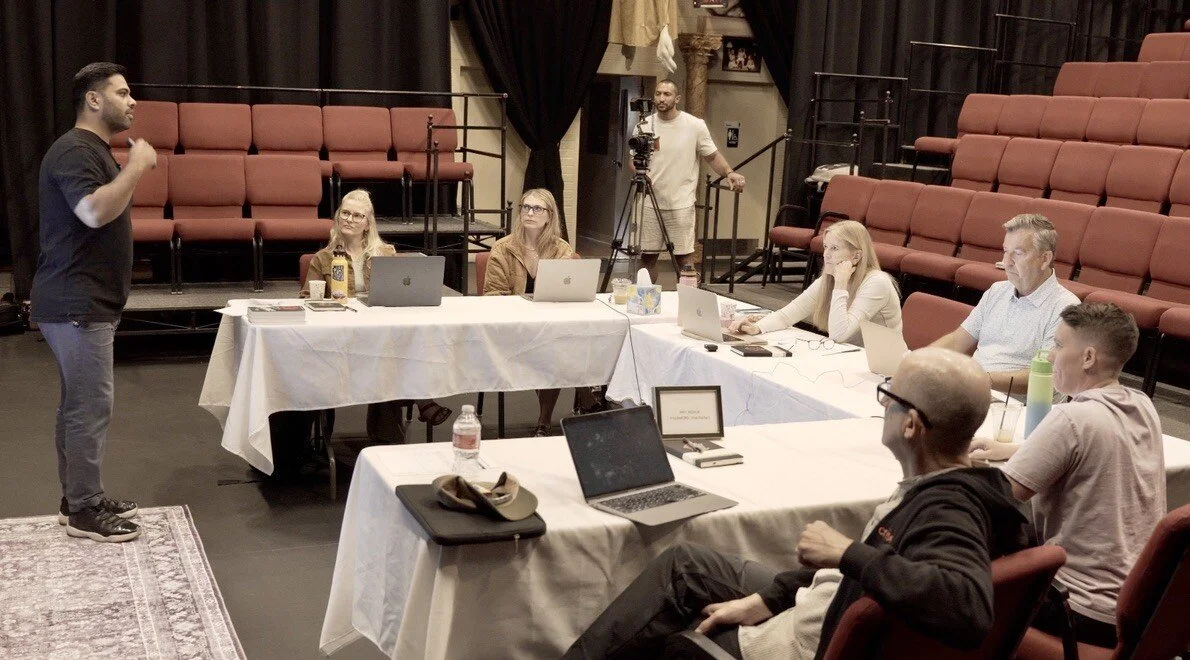
Author X Brand Camp 6-26
Lesson one: clarity is not always the thing stopping you
Most people assume they are stuck because they do not know their message or who it is for. Sometimes that is true. Often it is not.
I watched people with a sharp message and a clear audience still freeze before hitting publish. The block was not clarity. It was the courage to show up for themselves as the expert they already are.
If that is you, more strategy will not fix it. You do not need another framework. You need permission, and you are the only one who can sign it.
Here is how I think about the difference. If you cannot explain who your work is for and what it does for them, that is a clarity problem, and we can solve it in an afternoon. If you can explain it and you still will not post, that is a visibility fear, and no framework will carry you across that gap. You have to walk across it yourself.
I say this as someone who teaches visibility for a living and still avoided his own biggest visibility move for years. So I am not standing above you on this. I am standing next to you.
The work, if this is you, is small and repeatable. Publish one thing that is honest before it is polished. Then do it again. The fear does not disappear. It gets quieter every time you act in front of it.
Lesson two: stop chasing the mic drop, start documenting
So many people kill their own momentum trying to make every post a masterpiece. Every line has to land. Every post has to go big. So they sit on ideas for weeks, then post nothing, then feel behind, then promise to start again Monday.
That is the mic drop trap. And it is a quiet way to disappear.
The fix is to document instead of perform. Document what you are learning. Document what a client said that stuck with you. Document the question you got asked three times this week. Document the thing you used to believe and changed your mind about.
You do not need a mic drop. You need a record.
You will not always see the proof that it is working.
I know my newsletter has helped at least ten new authors start publishing a newsletter and another twenty post more often. I know because I watch it happen. I see it in my feed. I see the names start showing up where they used to be silent.
I do not get a "you did this for me" message. I do not need one. That is not why I do it.
My job is to document and keep showing up. If I waited for the thank-you note before I believed it was working, I would have quit a long time ago.
So measure your consistency, not your applause. The applause is a lagging indicator and a fickle one. The consistency is the only thing fully under your control.
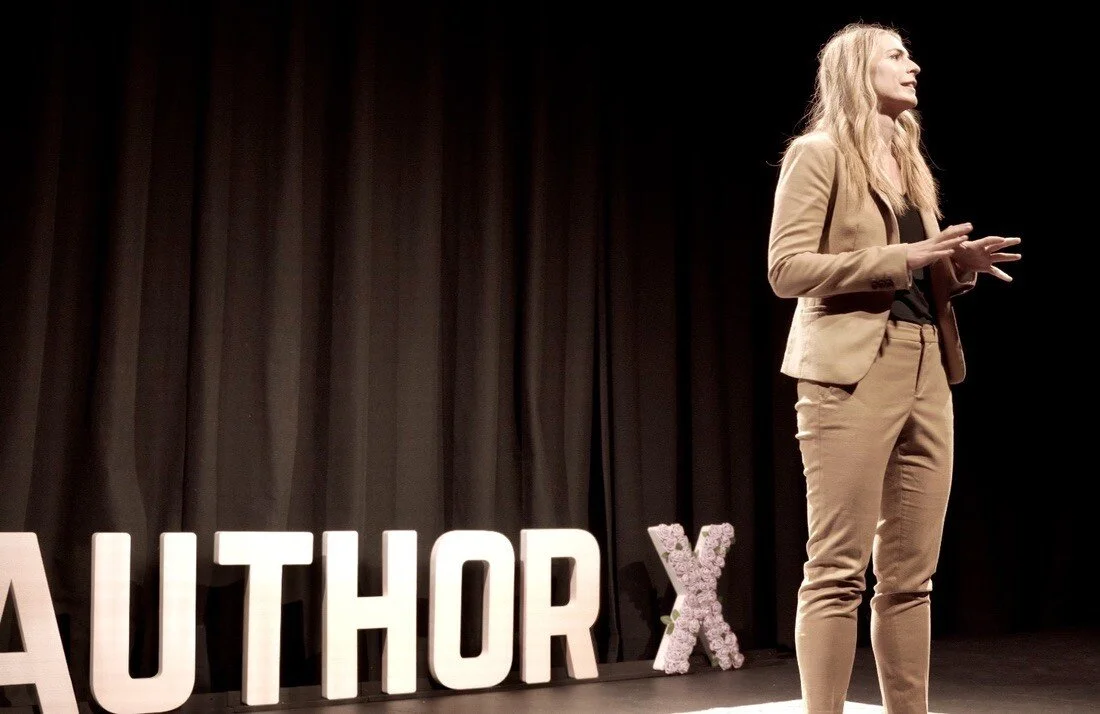
Sara Capra giving her Author X Talk
Lesson three: top of mind beats top of feed
Here is one of the biggest things we talked about in that room.
Someone seeing your content does not mean they will buy from you. It does not mean they will reply. It does not even mean they like you. That is fine. That was never the job.
The job is to rent free space in their mind.
When you stay top of mind, something happens that you almost never get to witness. Someone forwards your video to a friend who needs it. Someone mentions your name in a room you will never sit in. Someone remembers you eight months from now, exactly when the moment is finally right for them.
That is worth more than a like. A like is a reflex. A referral is trust.
People can scroll past me. They can dislike my content. They can decide I am not for them. I still win, as long as I showed up and gave them a way to find me later.
So stop scoring yourself on the reaction you can see. Start playing for the moment you will never see. That is where the real compounding happens.
The point of showing up is not to convert the person watching. The point is to be the name they hand to the person who is ready. Build for the referral, not the reaction.
Lesson four: you do not need every channel
I am not trying to grow everywhere. I gave up on that a long time ago, and it was a relief.
I make sure I have content sitting on the channels people actually search when they go looking for someone like me. That is the whole strategy. Depth in the right places beats noise in all of them.
Here is how I would decide where to spend my energy if I were starting today. Pick the one channel where your buyer already spends time and already searches. For me, that is two places, and I treat the rest as overflow. I do not chase a new platform because it is trending. I ask one question. When someone is finally ready to find me, where do they look? I put my work there, and I make it easy to find.
Everything else is a bonus. Most people have this backwards. They spread thin across six platforms and go deep on none, then wonder why nothing catches. Go deep on one. Be findable on the one that matters. Let the rest wait.
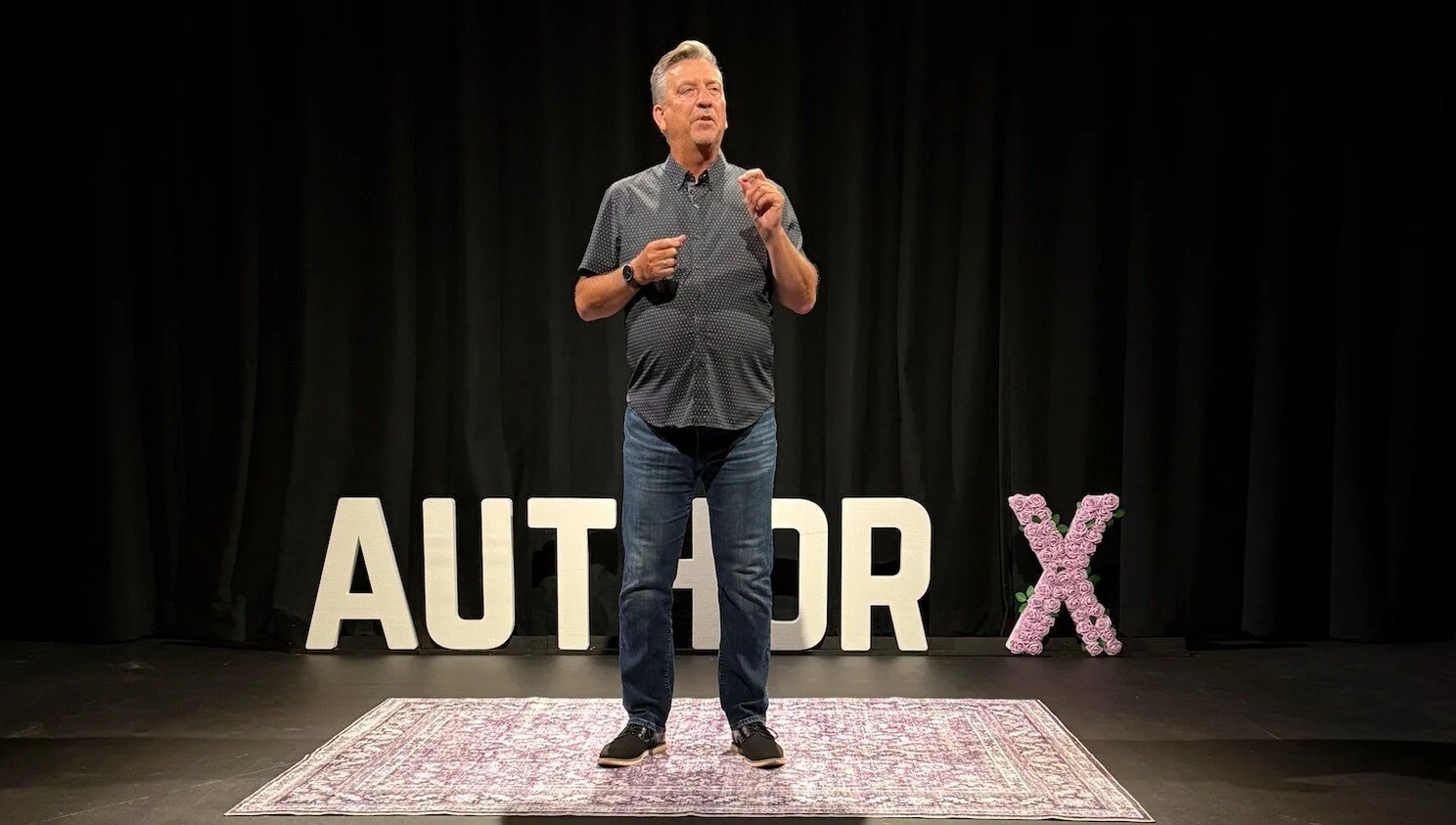
Andrew T. Ceperley giving his Author X Talk 6-2026
Stop comparing up
Comparison is quietly killing more author careers than bad writing ever will.
Do not measure yourself against the big-name authors.
They have teams. They have publicists on retainer. They have hundreds of thousands of dollars aimed at reaching massive audiences. They have an agent, an assistant, an email list built over fifteen years, and a publisher spending money you will never see on a line item.
When you watch their launch and feel behind, you are comparing your day one to their decade. That is not a fair fight, and it was never meant to be one.
You have to know where you actually are. You have to know what you can actually commit to. Not what looks good. What you will truly do, week after week, when no one is clapping.
But before any of that, you have to settle one question, and it is the most important one in this whole letter.
You have to know it is worth it.
Worth your time. Worth your money. Worth the discomfort of showing up before you feel ready. Because if you have not decided your work is worth it, you will quit the moment it gets hard, and it always gets hard. The authors who make it are not the most talented ones. They are the ones who decided early that the work was worth doing badly until they could do it well.
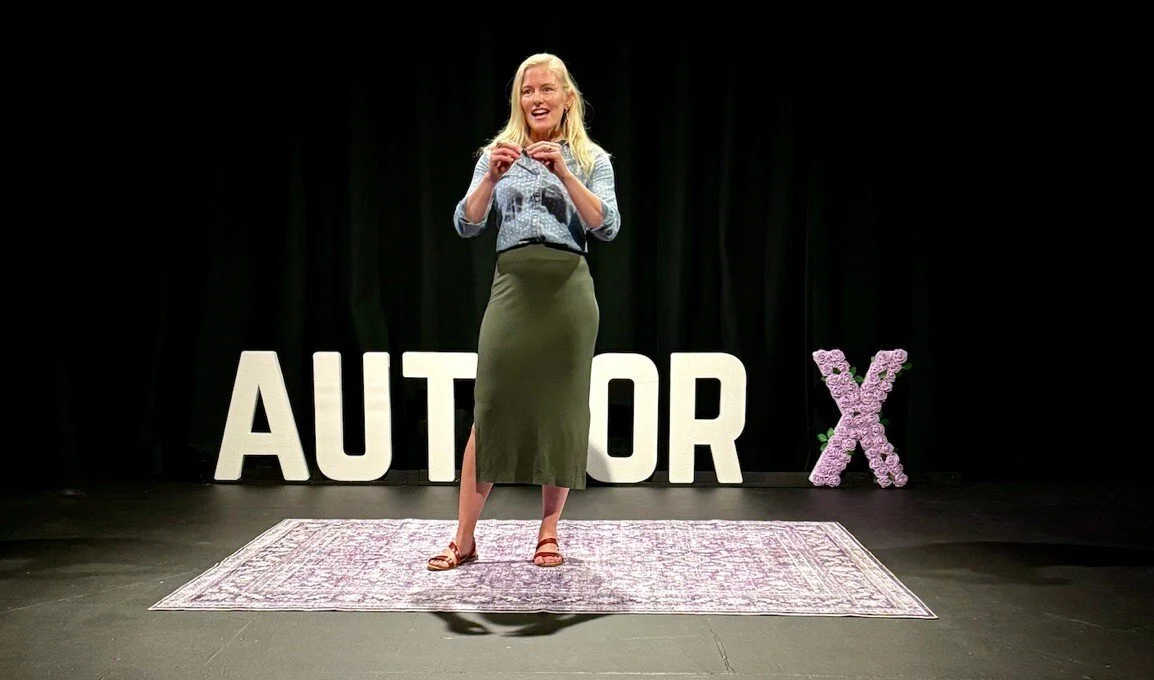
Emily Gindelsparger giving her Author X Talk 6-2026
Get scrappy: what you do when you do not have the money
Let me tell you about a conversation that stuck with me.
I asked an author what they would do if their book came out and they did not have fifteen thousand dollars to drop on PR. A lot of authors think that is the price of a real launch. So I asked. No money. What now?
They said they would get scrappy.
I loved that answer. So let us actually unpack it, because "get scrappy" is easy to say and most people never define it. What does scrappy actually mean? What are you going to do if you do not have the money?
Here is the truth that the PR invoice hides from you. So much of what moves a book does not cost a dollar. It costs nerve and effort, which is exactly why most people would rather pay to avoid it.
I'm not saying good PR is not worth it by any means. I'm saying if you don't have money for it, you can do parts of it on your own. Yes, PR firms have connections, they have the know how to get you on platforms etc. Sometimes they align, sometimes they don't. So Yes, use PR if you believe it's right for you and you can drop that money and know what you're getting. However, do not depend on PR making you a star or that it will move thousands of books.
Sending emails does not cost money. A personal note to a hundred people who already know you is free, and it will out-perform a press release to strangers every time.
Picking up the phone and calling bookstores does not cost money. Independent stores host author events. They stock local authors. They keep a shelf for the community. if a few say no, that's ok, keep trying there's a ton of them.
Also get creative, maybe book stores are not where you need to be. Maybe hotels will place your book on the bed side table. Maybe coffee shops will have it on tables or shelve maybe the local donut shop will carry it.
Get creative place it where it makes sense to your audience.
Calling your local library does not cost money. Libraries buy books. They host author talks. They have a built-in audience that shows up specifically to discover writers. That door is wide open and almost no one walks through it.
Guesting on podcasts does not cost money. There are shows in your niche with audiences already gathered, and the hosts need guests every single week. You bring the value, they bring the room.
Reaching out to your alumni magazine, your local paper, the community newsletter, the niche blog that covers your topic, none of that costs money. They need stories. You have one.
Speaking to a local group does not cost money. The Rotary club, the chamber, the library reading group, the meetup for your exact topic. They are looking for someone to fill the slot, and you are looking for a room. That is a match.
Building an email list before you launch does not cost money. Asking ten readers to form a launch team does not cost money. Cross-promoting with another author who serves the same reader does not cost money. Showing up in the comments of people you admire, with something useful to say, does not cost money.
Do you see the pattern? There is so much you can do to gather people around you that has nothing to do with your bank balance. The fifteen thousand dollar launch is one path. It is not the only path, and for most authors it is not even the best first path, because it skips the part where you learn to talk to your own readers.
Scrappy is not the consolation prize for people who cannot afford the real thing. Scrappy is the skill that makes the real thing work later. The author who learned to fill a room with fifty phone calls will always beat the author who only knows how to write a check.
How I actually filled the room
I want to show you that I do this, not just preach it.
To get six people into a space in Tucson, I sent out about fifty texts and over fifty emails. Personal ones. I posted about the event, I shared on my newsletter here. I did my best to get the word out to those who would potentially sign up. Messages to people, one at a time.
I did not spend money first. That was deliberate, and it is the most important decision I made in this whole event.
I wanted to make sure people would actually show up before I invested in the room, the production, the van, the photographer, any of it. I wanted proof that it was worth doing. Demand first. Spending second.
This is the order most people get backwards. They fall in love with the idea, they spend the money building the thing, and then they go looking for people. By then they are emotionally and financially committed, so they talk themselves into numbers that are not really there.
I did it the other way. I asked. I counted the real yeses, the people who would put a date on the calendar and mean it. Only then did I build.
If you take one tactical thing from this entire letter, take this. Validate demand before you spend. Get the commitment before you build the thing. It will save you more money and more heartbreak than any other single move in your business.
100+ personal messages got me six committed people for a first-ever event with zero proof to show.
That is the math of scrappy. It is not glamorous. It works, especially for something not very many people knew about and something being done for the first time. So, I can understand those who were hesitant. I wouldn't want to waste my time if I wasn't sure either.
Many said they wanted to come but the timing was off. That's ok, when I finalize the date on the next one, I'll be reaching out again.
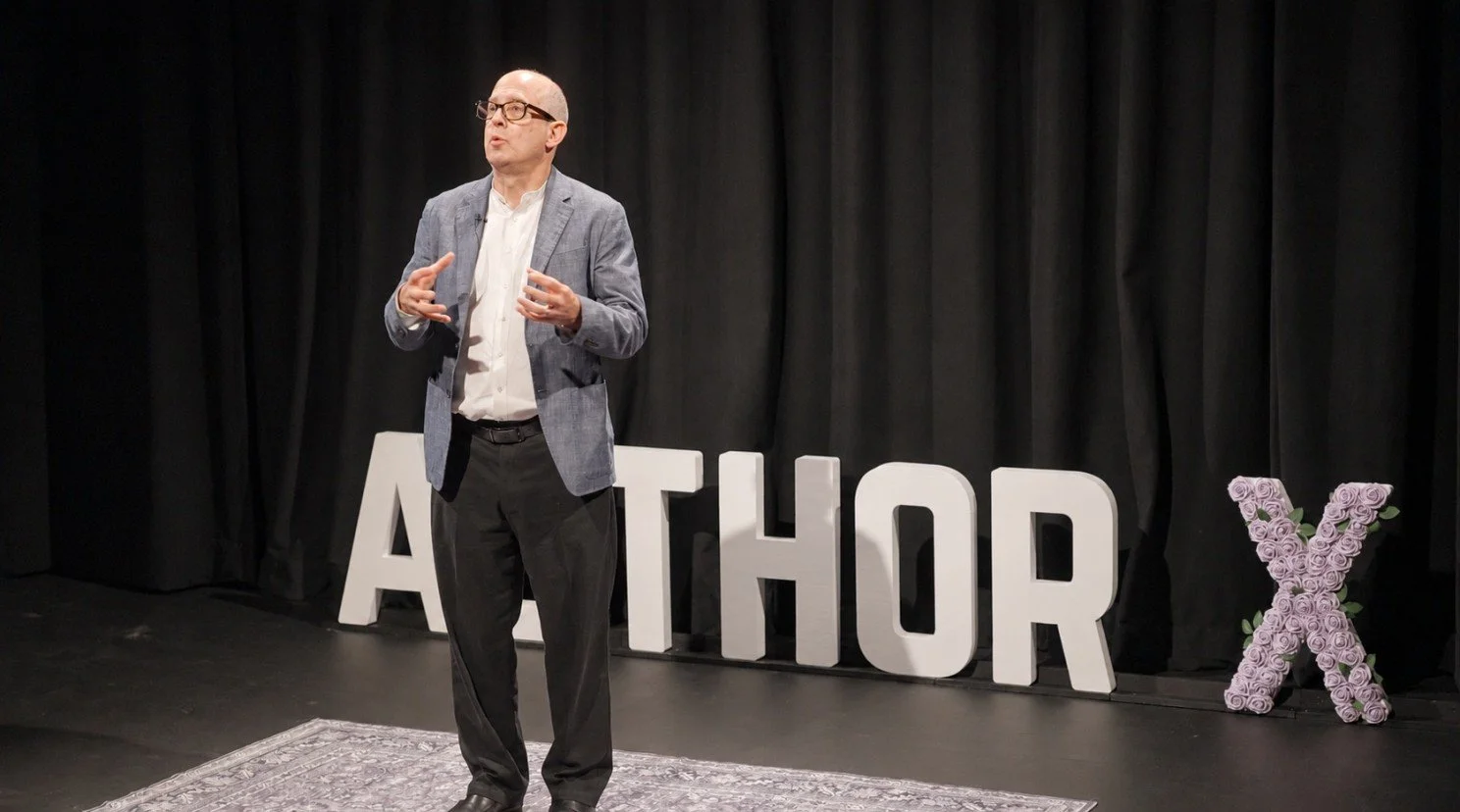
Joshua Mindel giving his Author X Talk 6-2026
The money, honestly
At the end of the day, I broke even on this event. A small first event, and I broke even.
I want to be plain about that, because plenty of people would look at "broke even" and call it a failure. They would be wrong.
It was worth its weight in gold, in every sense of the word.
Here is how I count the return, and how I would encourage you to count yours.
I now have proof. The next time someone asks if Author X works, I have six people, real talks, real feedback, and real assets to point to. I no longer have to ask anyone to take me at my word.
I have a repeatable model. I learned what to keep, what to cut, and what to charge for. I know how the room should flow now, because I watched it flow.
I have relationships that will outlast the event. Six authors who trust me, who saw me deliver, and who will talk about it.
I have a library of content. Headshots, podcast episodes, talks, footage, testimonials. Things I will be sharing with you for months. Things that keep working long after the event ended.
And I have something I cannot put a number on. I learned how much I want to do this. I learned more about myself in that room than I have in a year of doing everything else.
A first event that breaks even is not a break-even. It is an investment that already paid you in proof, in skill, and in clarity about what comes next. The revenue from a first event was never the point. The revenue comes on the second, the third, the tenth, once you have the proof the first one bought you.
So if you are sitting on an idea and waiting for it to be profitable on day one, I want to gently move you off that spot. Run the first one to learn and to break even. Run the next one to win.
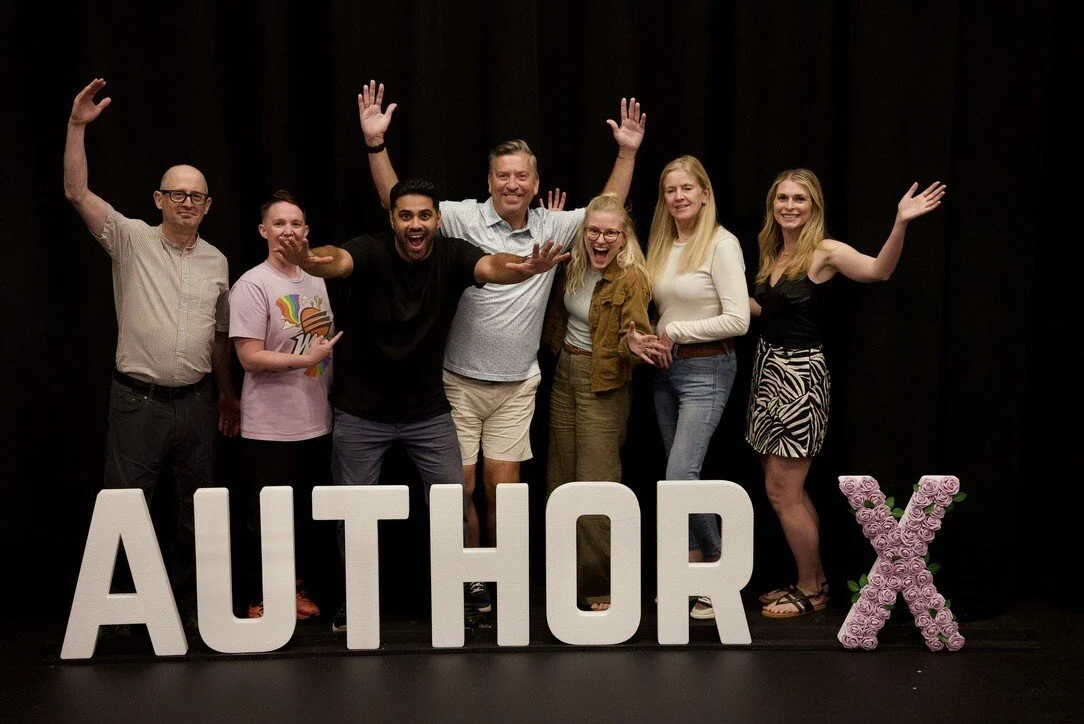
Author X Brand Camp 6-2026
Where this leaves me, and you
In-person events are not going away. I think they are about to matter more, not less. The more screens fill our days, the more we will crave a room, a table, and someone who looks us in the eye and tells us the truth about our work.
That is what I want to keep building. And we will certainly be doing Author X again.
So let me ask you something, and I mean it as a real question, not a closing line.
If you were to join us in January 2027, to kick off your year strong, what would make it a no brainer for you to show up, do the work, and have a good time with us?
Hit reply, comment or direct message and tell me. I read every one.
Hussein.