The LinkedIn Tool Almost Every Author Ignores (But Shouldn’t)
Most authors treat LinkedIn like a place to list their accomplishments, drop a few titles, throw “Author” in their headline, and hope opportunity magically appears.
They polish their headshot. They tweak a sentence or two. They post here and there. And then they wonder why nothing happens, why nobody reaches out, why event planners never inquire, and why the people they’re trying to serve still don’t understand what they actually do.
It’s not because they lack talent. It’s not because their book isn’t good enough. It’s not because the algorithm hates them.
Trust me I used to think the algo hates me too.
It’s because the way they present themselves online doesn’t match the power of the work they’ve actually done. And the biggest leak in their presence is the very thing sitting right under their name.
The One-Liner Problem
Bestselling Author | Entrepreneur | Speaker | Coach | Consultant | Mom of 3 | Practitioner | Creative | Founder | Visionary | Ninja at Sales and Marketing…
It just keeps going. A long string of titles that looks impressive at a glance but says absolutely nothing about who they help or what problem they solve.
Mom of 3 is its own category of badassery!
And if your headline looks something like that, I’m not here to insult you. But it’s worth asking a real, honest question:
Who does that one-liner actually help?
It’s basically a never-ending buffet menu. There’s a little bit of everything, so technically no one walks away hungry, but no one walks away impressed either. Buffets are fine if that’s your thing. They’re convenient, they’re broad, and they try to satisfy everyone at once.
But the places people rave about? Those are specialty spots. The Spanish restaurant where the chef cooks one signature dish that people drive across town for. The tiny sushi place with only three menu items but a line wrapped around the block because they’ve mastered those three things at an insane level.
When you focus, you become known for something. When you narrow your identity, your reputation deepens. When you stop being everything, you become unforgettable.
Your headline should read like that specialty place. Precise. Clear. Confident. Focused.
A single line that tells me exactly what you do, who you help, and why I should care.
And that, right there, is the difference between a headline filled with labels and a headline that actually leads someone to your door.
People are looking for clarity. They want to know why you matter to them.
When I work with authors, coaches, and experts, their “before” headline almost always looks like a grocery list of roles. Their “after” headline becomes a clear value proposition.
Here are real transformations; these are not meant to be perfect, and trust me, it takes weeks or even months to create a one-liner that really resonates and sticks.
Client 1 (Leadership Coach)
Before: “Leadership Expert. Author. ACC. Speaker.”
After: “I help executives build stronger teams and lead with confidence through strategic coaching and performance frameworks.”
Client 2 (Medical Professional)
Before: “Surgeon. Author. Educator. Jiu-Jitsu Athlete.”
After: “I help combat athletes prevent injuries, recover stronger, and perform at their peak using medical and performance expertise.”
Client 3 (Financial Advisor)
Before: “CFP. Founder. Author.”
After: “I help families gain financial clarity and build a secure future through simple, personalized wealth systems.”
Same person. Same expertise. Totally different perception.
The About Section
The About section is one of the most misunderstood parts of LinkedIn. Most authors use it to tell their life story. They talk about their passion, their certifications, their mission, their journey. It reads like a bio written for a publisher’s website, not a business platform.
The uncomfortable truth: Your About section is not supposed to be about you. It’s about making the reader feel seen.
A powerful About section follows a simple structure:
Part 1: Name the real problem your audience faces “Most authors have powerful stories but struggle to turn that story into visibility, authority, and real opportunities.”
Part 2: Describe the consequence of not solving it “Without clarity, your message gets buried under noise, and your book ends up collecting digital dust instead of opening doors.”
Part 3: Explain what you actually do “I help authors build visible, credible brands that attract readers, clients, and speaking opportunities through strategic storytelling and online presence development.”
Part 4: Show social proof without bragging “I’ve helped authors land podcast interviews, paid speaking gigs, TEDx spots, and consistent inbound leads by redesigning their positioning and digital ecosystem.”
Part 5: Give one simple next step “If you’re ready to strengthen your brand, start by exploring the Featured section below. You’ll find my book, newsletter, case studies, and how to work with me.”
Clarity beats credentials every time.
The Featured Section
The Featured section is where serious people make serious decisions. If someone wants to hire you, book you, interview you, or learn about you, this is the section they hover over. This is the moment where they decide if you’re the real deal.
And most authors waste it.
They leave it empty. They cram it full of random posts. They let old content sit there from years ago like dusty trophies.
So here is the order that actually works. This order follows the psychology of a decision maker, not the ego of the creator.
Item 1: Book Me to Speak or Book a Consultation
This belongs first because this is your most valuable action item. If someone is already warm, already curious, already convinced you might be the right person, they shouldn’t have to scroll or guess or hunt down your next step.
This tile should:
Link directly to your speaking page, work-with-me page, or booking link
Use a bold thumbnail that says exactly what it is
Include a line like: “Book me to speak at your next event” or “Schedule a strategy consultation”
Add a subline stating who it’s for and what outcome they can expect
You are eliminating friction. You are telling decision makers, “If you’re ready, let’s talk.”
Item 2: Your Book
Your book is your credibility anchor. It shows you’ve organized your thinking, developed a framework, and done the work at a level most people never will.
This tile should:
Use a custom graphic (not the messy default link preview)
Show your book cover clearly
Include a line like: “Explore the book that helps [your audience] [achieve X]”
Link directly to your Amazon page or your book landing page
This is not just a product. It’s your intellectual proof that you have something to say.
Item 3: Your Newsletter or Lead Magnet
Your email list is the relationship engine behind your entire brand. Social media fluctuates. Algorithms change. Platforms die. But the list keeps your people connected to you.
This tile should:
Invite people to join your world long-term
Promise a clear benefit
Link to a landing page that collects emails
Use a calm, clean visual that feels like an invitation, not a sales pitch
This is how you build trust beyond a single click.
Item 4: Your Best Thought Leadership Piece
Not your latest post. Not a random highlight. Your best idea. The one that reveals your philosophy and your depth. This could be an article, a YouTube video, a long-form LinkedIn post, or a guide.
This tile should:
Clearly show the topic
Have a headline that makes people feel something
Link to your strongest thinking
This is where people decide, “I want more from this person.”
Item 5: Social Proof
Decision makers want to see that others have trusted you. This is where you feature your TEDx talk, media interview, podcast appearance, testimonial video, or case study. Sometimes you need this to be #2 or #3 depending on what you offer.
This tile should:
Clearly show the platform
Use a line like: “Watch my TEDx talk on [topic]”
Give one sentence of context
Build confidence without ego
This is the closer.
Why This Order Works
This sequence follows the real psychological path someone takes when making a decision:
Step 1: Can I hire this person right now?
Step 2: Do they have a foundation of real expertise?
Step 3: Can I stay connected and learn more?
Step 4: Do I resonate with how they think?
Step 5: Can I trust them based on evidence?
This isn’t just design. This is how you turn curiosity into commitment.
Now, Let Me Tell You About Ravi
Because Ravi’s story proves exactly why this matters.
When I met Ravi, he was doing what most authors and early-stage speakers do. He had the passion. He had the drive. He had the experiences worth sharing. But his online presence didn’t reflect the quality of the work he was capable of delivering. His headline was vague. His About section was broad. His Featured section had gaps. His website looked like a work in progress instead of a professional representation of his voice.
He wanted to become a full-time speaker and consultant. He wanted to get on a TEDx stage. He wanted to make his story visible and open doors in the corporate speaking world.
So we went to work.
We rebuilt his profile from top to bottom. We clarified his headline so people immediately understood the problem he solves. We rewrote his About section so the right people could see themselves in his mission. We restructured his Featured section to showcase his offer, his book, his ideas, and his credibility in the right order. We aligned his website to match the professional direction he was moving toward. We helped him build content that reflected his actual depth.
And behind the scenes, he was pushing hard. Pitching. Knocking on doors. Doing the uncomfortable but necessary work. Sending emails that got ignored. Following up anyway.
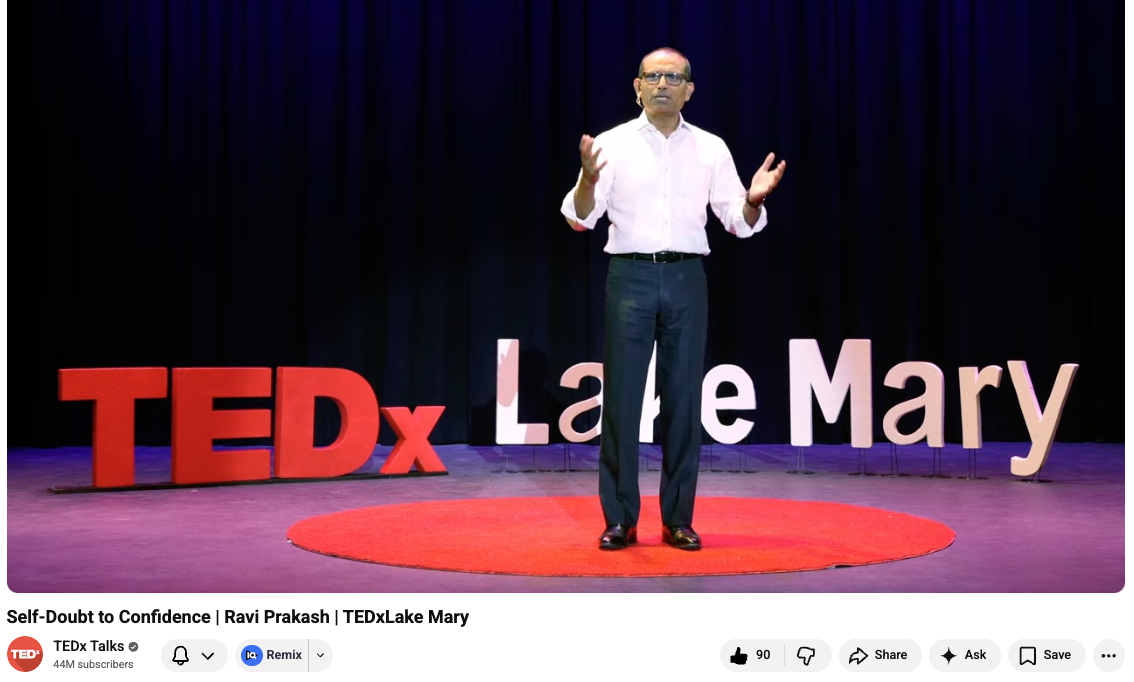
A few weeks ago, Ravi Prakash delivered his first TEDx talk.
You can watch it here https://www.youtube.com/watch?v=ULNDVkxUxOc
Not because he “got lucky.” Not because someone handed him a shortcut. But because he aligned his online presence with his ambition, stepped into the identity of a pro instead of an amateur, and backed it up with relentless follow-through.
Event planners treated him differently because he started treating himself differently. And his presence finally communicated what he had been trying to say all along.
There is no straight line to your goals. But when you present yourself with clarity, intention, and consistency, the path becomes a whole lot smoother.
I'm proud of Ravi's work, and you can check out his page and see the work we've put in on his online presence to get some inspiration.
The Big Lesson for Authors
You can write a powerful book. You can have a compelling story. You can have a message worth sharing. But if your online presence doesn’t reflect the quality of your work, the world won’t know how to take you seriously.
LinkedIn is not a resume. It is a reputation.
Your headline should tell me who you help and how. Your About section should speak to the reader’s struggle, not your accolades. Your Featured section should guide people through the journey of hiring you, reading you, learning from you, and trusting you.
When you get this right, everything changes.
The right people start finding you. Event planners start reaching out. Podcast hosts start inviting you. Clients start booking calls instead of scrolling past. Your book becomes a magnet, not a memory.
Stop hiding your best work. Start presenting it with intention. The opportunities you want are already looking for you. Make it easy for them to say yes.
If you need support with any of this work, message me. I would love to support.
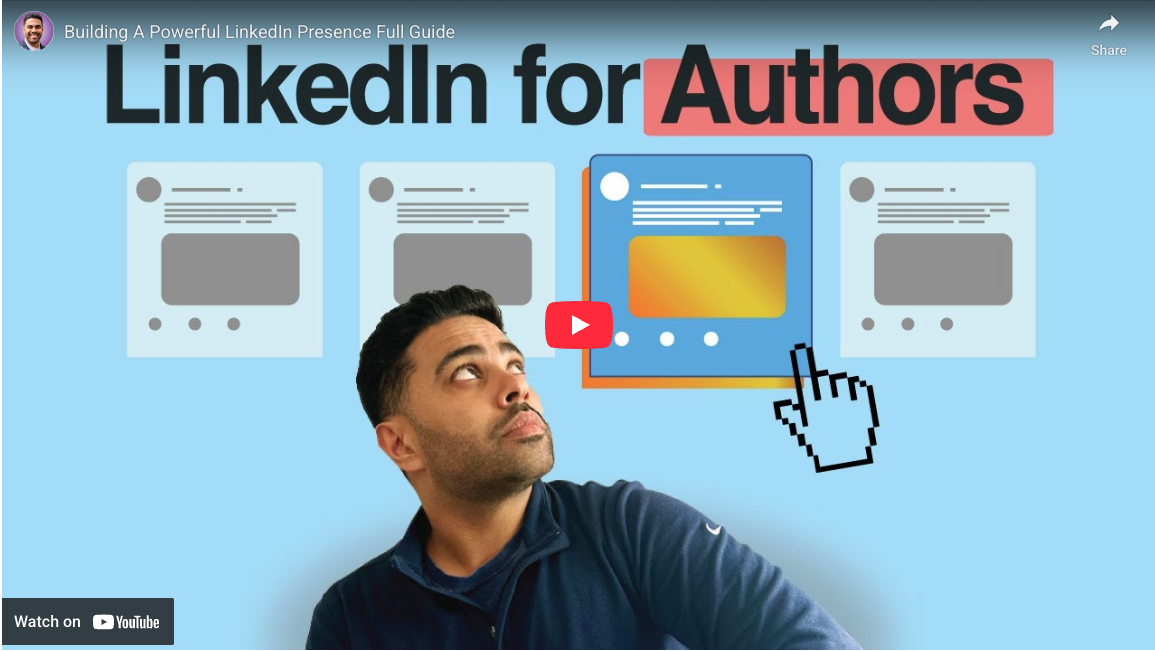
PS. I made this video below all about LinkedIn for Authors if you need some direction as well. Make it a great week.
Hussein
https://www.rising-authors.com/podcast/building-a-powerful-presence-full-guide