The Author Presence Problem
Fingers clicky clacking on the keyboard the night before I meet a potential client or someone I want to podcast with. Searching their name. Hunting for anything useful.
I research people.
Website. LinkedIn. Social profiles. Sometimes all three in ten minutes.
Sounds basic. But I know you have done it too. We all Google each other. That is just the world we live in now.
So let me ask you something.
When is the last time you Googled yourself? What came up?
Not what you hoped would come up. What actually came up.
That answer matters more than your follower count.
When someone is considering working with you, booking you, buying your book, or inviting you on their show, they are not just looking at one thing. They are looking at all of it. Your website. Your LinkedIn. Your social profiles. Whatever surfaces first.
They are quietly scoring you.
If your last post was eight months ago, if your headshot looks like it was taken at a Sears portrait studio in 2014, if your website has a broken link on the homepage, they notice. All of it adds up to an impression before you ever speak a word.
Think bad dating app vibes.
You show up on a Zoom call and you look nothing like your profile picture. That is not a great start. That is a trust gap before the conversation even begins.
This is why I tell every client the same thing.
Stop worrying so much about views and metrics. That is not the point. Not yet.
The point is curation. Building an online presence that is honest, current, and intentional. Something that reflects who you actually are right now, not who you were three years ago.
You do not need to be everywhere. You need to be in a few key places that show up as fresh, clean, and alive.
Think carefully about who each platform is for and why your presence there is interesting. Then show up there consistently. When someone searches your name, what they find should feel like you just walked into the room.
That is visibility. And it is entirely in your control.
Visibility is not a metric.
Metrics are downstream of visibility. Views, clicks, open rates, followers. Those are the receipts. Visibility is the decision you make before any of that happens.
It is the answer to one honest question.
If someone Googled your name right now, what would they find?
Marketing means something different when it is you.
I have sat across from people who ran marketing departments at companies you have heard of. Big budgets. Teams. Campaigns. The whole machine.
They funneled millions into keeping a brand name alive. Athletes, billboards, Super Bowl spots. That is not marketing yourself. That is renting attention at scale.
Most of us do not have Nike money.
We are not signing anyone to endorse our book. If you are, good for you. Leverage that.
For the rest of us the question is simpler and harder at the same time.
How do you bring attention to your work without writing a check that empties your account?
You build something. You show up. You give value before you ever ask for anything.
That is what marketing actually is when it is personal. It is not a campaign. It is a long game of trust.
I spoke at high schools for ten years.
From 2010 to 2020. Oregon. Washington. Small classrooms. Full assemblies. I was paid almost nothing for most of it.
But I got better. My hooks got sharper. My stories landed harder. I watched TEDx videos for hours studying what made someone worth listening to. I was practicing without knowing I was practicing.
Here is what most people did not know.
I ran a print shop. Schools need shirts printed. A lot of them. So I spoke for free and made hundreds of thousands of dollars printing for schools over the years.
The speaking was the door. The printing was the business.
Sometimes the most powerful thing you can do is package your offer inside something people already want. Give them a reason to say yes to the first thing. The second thing takes care of itself.
That is the principle behind everything I am about to share.
Nine ways authors can actually get visible.
These are not theories. These are things we have helped authors execute. Some cost nothing. Some cost a little. All of them require you to show up consistently.
One. Post regularly and build real connections online.
This is the lowest hanging fruit and most authors still skip it. Not posting when inspiration strikes. Posting on a schedule. Building actual relationships in the comments, in the DMs, in the replies. Presence compounds over time.
Two. Start a newsletter worth reading.
Not a newsletter that announces things. A newsletter that goes deep into topics the exact people you want to reach actually care about. Distribute it on LinkedIn. Substack. Medium. Wherever your people are already reading. Each issue should make someone feel like they got something real out of it. Think about this newsletter right now. You found it somewhere. Something made you open it.
Three. Start a podcast.
It is not saturated. Not even close. You can build something genuinely interesting, have real conversations with the people you want to work with, and package any business underneath it as a vehicle for connection and opportunity. I do this every week. A podcast is one of the most underrated trust builders available to any author or expert. Ask me about it.
Four. Start a YouTube channel.
Video builds trust faster than almost anything else. People seeing you regularly, hearing you think out loud, watching you show up week after week. If you are a speaker without a committed YouTube channel you are asking people to hire you without ever letting them hear you speak. That math does not work. How will someone book you if they have never seen you in action?
Five. Build a remarkable website.
Not just a digital business card. A useful one. A reason someone comes back. A place that actively earns the visit. You will stand out just by having a site that looks like you took it seriously and works the way it should. Make it a resource. Update it. Drive people there. Own it like it is your most important piece of real estate. Because it is.
Six. Speak for free.
Call schools. Call your chamber of commerce. Call local clubs and organizations. Tell them you want to give a short talk or workshop on a topic that matters to their people. You will get rejected. Good. More no's lead to yes's. Get your reps in. Your hooks will get sharper. Your stories will land harder. The paid opportunities come out of these free rooms.
Seven. Send your book to event and conference managers.
Call them. Email them. Tell them you want to donate copies for their conference goodie bags. Send a few copies first so they can see what they are getting. Give them a green light option. Everybody loves free stuff. And a room full of your ideal readers holding your book in their hands is not nothing.
Eight. Sponsor something small.
It amazes me how much authors spend on publishing and how little they spend on visibility. Two thousand dollars sponsoring a local run, a school grant, or a community event can get you more real and targeted attention than most paid digital ads if you think it through. Small sponsorships can carry your name into rooms you would never reach otherwise.
Nine. Get on podcasts. One a week minimum.
There are hundreds of thousands of active podcasts. Not all of them will move the needle right away. That is not the point at the start. Your communication skills will sharpen every single time. Connections will come. Opportunities will surface. You climb that podcast ladder by starting wherever you can and showing up every week without exception. Eventually you land on the one that hits.
You do not have to do all of these at once.
That is actually the point.
This list is not a to-do list you knock out in a weekend. It is a menu. A set of options you build out over months with intention and clarity. That is exactly why Rising Authors exists. We help authors develop these things one by one, in the right order, with a real strategy behind them.
But before any of that can work, there is a mental switch that has to happen first.
If you shut down when you read that list, if every item triggered a reason why it would not work for you, that reaction is worth paying attention to. That is not strategy. That is fear wearing the costume of logic.
And that is fine. Fear of visibility is real. Putting yourself out there is uncomfortable for a lot of people.
But be honest with yourself about the trade.
If visibility is not for you, that is a valid choice. Just lower your expectations accordingly. Lower them on book sales. Lower them on speaking bookings. Lower them on opportunities finding you. What you put in and what you get out are closely tied.
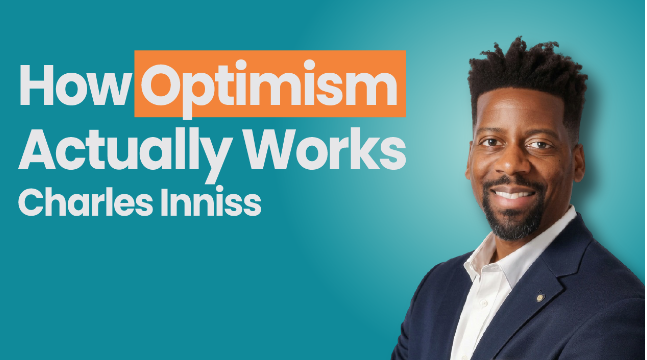
Being an optimistic author is key here in every sense of the word. Put your smile on while you do this work, make it fun for your self. Speaking of optimism. I did a great interview with my friend Charles Inniss, Jr DPT, PCC, NBC-HWC All about his new book "Up your Optimism Game" You can watch the podcast here.
Marketing, at least the way I think about it, is a culmination of a variety of these things over time that builds trust. And trust is what creates the opportunity to sell, share, or get your message to the people it was meant for.
This week I celebrated my 41st birthday with my family.
The past two weeks have been deeply reflective for me. I stepped back from social for a bit. Took some quiet.
I signed up for my friend Emily Gindlesparger Healing Through Stories writing workshop and it has been one of the better decisions I have made recently. Writing as a way to look back, to process, to sit with things.
I have been going through old memories and stories from my past. Working through forgiving a younger version of myself. But also genuinely impressed by him. The energy that kid had. The audacity to go out and just do things without having it all figured out.
That reflection has put me at ease in a way I did not expect.
Because my current self just loves being present. With my son Amir. With my wife Hannah. Not chasing. Not making noise for the sake of it. Just being here, in my work, in my life, with my people.
That is enough. More than enough.
I will catch you next week.
Hussein