I Studied 100 Bestsellers. They All Broke the Same Rule
Some people who follow me have probably unfollowed me because I'm in their feed too much.
I post almost daily. I'm religious about this weekly newsletter and my podcast. And yeah, I may be in your feed too much, or share too much.
The main key for me is to stay top of mind. I also know I get a few new followers per week who have never seen my work. That is why repetition is key here.
So many people are terrified of being in the feed too much, so they never share anything at all. It's like walking into a gym, watching the bodybuilders training for a show, and saying "well, I don't want to work out because I don't want to look like them." Trust me, it's going to take a whole lot of showing up before you get anywhere close to that.
There are billions of people on this earth, and the word everyone can quietly kill your brand. Because it's never really everyone you're afraid of. It's usually one person's voice that creeps in, one imagined critic, and we shrink ourselves down over what that one person might think or say.
I've been slowly studying bestsellers for the better half of a year now, trying to figure out what they do differently than the rest of us mere mortals when it comes to authorpreneurship. And it kept coming back to one thing.
The books that sold in the tens and hundreds of millions weren't the balanced ones. They weren't the tasteful ones. They were too much of one specific thing, and they refused to become less when the reasonable people asked.
The rule they all broke
Here it is, plainly. The rule is "be for everyone." Don't offend. Don't polarize. Stay in the safe middle where nobody can object.
Every book you're about to see broke it on purpose.
Chicken Soup for the Soul was too sappy for serious publishers. 144 of them rejected it, each one certain nobody buys short inspirational stories. It's sold over 500 million copies. Somewhere out there are 144 editors who were all wrong about the same manuscript.
Harry Potter got passed on by 12 publishers who explained that kids' books about magic don't sell. When Bloomsbury finally said yes, they printed 500 copies and told Rowling to keep her day job.
The 4-Hour Workweek was turned down by 26 of the 27 publishers Tim Ferriss showed it to. The promise was too audacious to believe. It launched an entire genre and a career that's still compounding.
And those are just the famous ones. Here are the ones nobody tells you about.
Dune was rejected 20 times and finally published by a company that made car repair manuals. It was the first novel they'd ever printed. It's now the best-selling science fiction book in history.
Stephen King threw Carrie in the trash after 30 rejections. His wife fished the pages back out and told him to finish it. That book launched the biggest horror career of all time.
Zen and the Art of Motorcycle Maintenance was rejected 121 times. The editor who finally said yes did it out of conscience and figured it would never turn a profit. It's sold more than 5 million copies.
A Wrinkle in Time was turned down 26 times for being "too different," and partly for daring to put a girl at the center of a science fiction story. It won the Newbery Medal.
The Help collected 60 rejections over three and a half years. One reply told Kathryn Stockett, "There is no market for this kind of tiring writing." It sat at number one for over a year and has sold 15 million copies.
Dr. Seuss's very first book was rejected 27 times, and he was literally walking home to burn the manuscript when he bumped into an old college friend who had just become a children's book editor. That chance run-in is the only reason we have Dr. Seuss.
John Grisham couldn't get A Time to Kill off the ground, so he sold copies out of the trunk of his car at little library gatherings across Mississippi. He's now sold hundreds of millions of books.
Beatrix Potter got so tired of publishers insisting The Tale of Peter Rabbit be bigger so they could charge more, that she printed 250 copies herself and handed them out. It's since sold 45 million.
Lord of the Flies was rejected more than 20 times, and one publisher's reader scrawled across it, "Rubbish & dull. Pointless." It became a classic taught in schools all over the world.
Even The Diary of Anne Frank was pulled off a reject pile after roughly a dozen publishers passed, most of them figuring it was too sad and too small to sell.
Notice what the rejections actually said. Not "this is bad." Not "you can't write." They said it was too much of something to work. Too sappy. Too weird. Too bold. Every single one was really asking the same thing: come back to the middle where it's safe.
And the nonfiction crowd leaned all the way in
Now, you might think rejection is a fiction problem. It isn't. Nonfiction has its own version of this rule, and the biggest sellers didn't just survive being "too much." They made the "too much" the entire product. This is the part I want you to really sit with, because you write nonfiction, and this is the closest thing to a blueprint you'll find.
Mark Manson put a swear word in the title. The Subtle Art of Not Giving a F*ck was too crude, too flippant, too rude to be taken seriously as self-help, and that was exactly the point. He built an entire "anti-self-help" brand on being blunt where everyone else was soft and syrupy. Over 20 million copies, and counting.
Marie Kondo told grown adults to hold each individual sock, ask whether it "sparks joy," and then thank their old belongings out loud before letting them go. One reviewer flat-out called it deranged. It was too woo, too precious, too strange, and instead of dialing it back she leaned so far in that "KonMari" became a verb. More than 10 million copies and a Netflix show.
Robert Greene wrote The 48 Laws of Power so cold-blooded and Machiavellian that it's the most banned book in American prisons, because wardens genuinely fear inmates will weaponize it. He didn't soften the ruthlessness to seem more respectable. He turned the menace into the brand, and CEOs, rappers, and athletes made it a cult classic north of a million copies.
David Goggins refused to be likable or relatable. Can't Hurt Me is brutal, extreme, and about as far from a warm hug as a book can get, and he self-published it in 2018 rather than let a single editor sand down the intensity. Somewhere past 5 million copies later, "stay hard" is a movement.
See the pattern? Not one of them found their audience by being more balanced. They found it by cranking the dial all the way up on the exact trait a reasonable editor would have begged them to tone down. The weirdness wasn't the bug. The weirdness was the business.
The middle is where books go to die
The middle feels safe. This is honestly something I wish I had trusted before launching my first book. It's ok though, it's how we learn.
A book with no edges is a book with nothing to grab. Nobody remembers it, nobody argues about it, nobody shoves it into a friend's hands and says you have to read this. It doesn't get rejected, but it doesn't get loved either. It just sells a few copies to people who already knew you, and then it goes quiet.
That's not safety. That's dying slowly enough that you don't notice.
The thing you keep getting told to tone down is usually the exact thing that would make you unmistakable. And unmistakable is the only real edge an author has, because more books get published every day than anyone could read in a lifetime.
Your brand isn't your logo or your cover font. Your brand is your too. It's the intensity you've been told to dial back, the opinion you've been told to soften, the obsession you've been told to broaden until it appeals to everyone and therefore no one.
You cannot be adored by your people without being not-for-everyone. The same edge that makes half the room lean in is what makes the other half walk out. A room nobody leaves is a room nobody leans into.
They broke the same rule online
They broke the same rule online
Here's what most people miss. These authors didn't just break "be for everyone" inside their books. They broke it everywhere they showed up.
Look at how the standouts run their online presence and it's the same move on repeat. They pick one lane and stay in it instead of posting a little about everything. They say the thing out loud that other people in their space only whisper. They repeat their core idea until it's almost annoying, because that repetition is exactly how you become known for something. Tim Ferriss didn't build a bland author page; he built a blog and one of the biggest podcasts on earth around a single obsession, getting extraordinary results in less time, and he's been hammering that one note for years.
The forgettable authors do the opposite online. They post safe. They stay agreeable. They chase whatever's trending that week, so nothing they say ever sticks to their name. They sound like everyone else, which means they sound like no one.
So online, the rule breaks like this: be known for one thing, not liked for everything. Say what you actually believe, even when it costs you a few followers, because the people who stay are the ones who buy. Be recognizable enough that someone could screenshot your post with the name cropped off and still know it's you. That recognizability is the whole asset. It's the difference between an author with an audience and an author with a feed.
Your move this week
So here's the work, and it's not comfortable, which is how you know it's the right work.
Finish this sentence: "I'm the author who is too _______." Too blunt. Too obsessed with one weird thing. Too willing to say the quiet part. Whatever it is, write it down without flinching. That word is not your flaw. It's your whole brand.
Then do one thing with it this week. One post, one email, one chapter where you turn that dial up instead of down. Stop apologizing for the edge and aim it, straight at the specific people who've been waiting for someone bold enough to be exactly that much.
Always remember this when comparing yourself, first don’t compare it will kill the joy of whatever you’re working on. Also please remember not one of these authors did it alone.
Every single one of them got help somewhere along the way, whether it was an editor who finally saw it, a mentor, a team, or a publisher who took the bet after everyone else passed.
They stopped trying to white-knuckle it by themselves and they reinvested, in their work and in their own growth, in their brand, their channels, their craft, all of it. Showing up daily is the price of entry. Getting help is how you go from showing up to actually standing out.
The reasonable people will keep telling you to tone it down. The day they stop is the day you've sanded away the only thing that made you worth remembering.
That's the rule they all broke. Go break it beautifully.
Speaking of leaving your comfort zone on purpose, this episode fits right in.
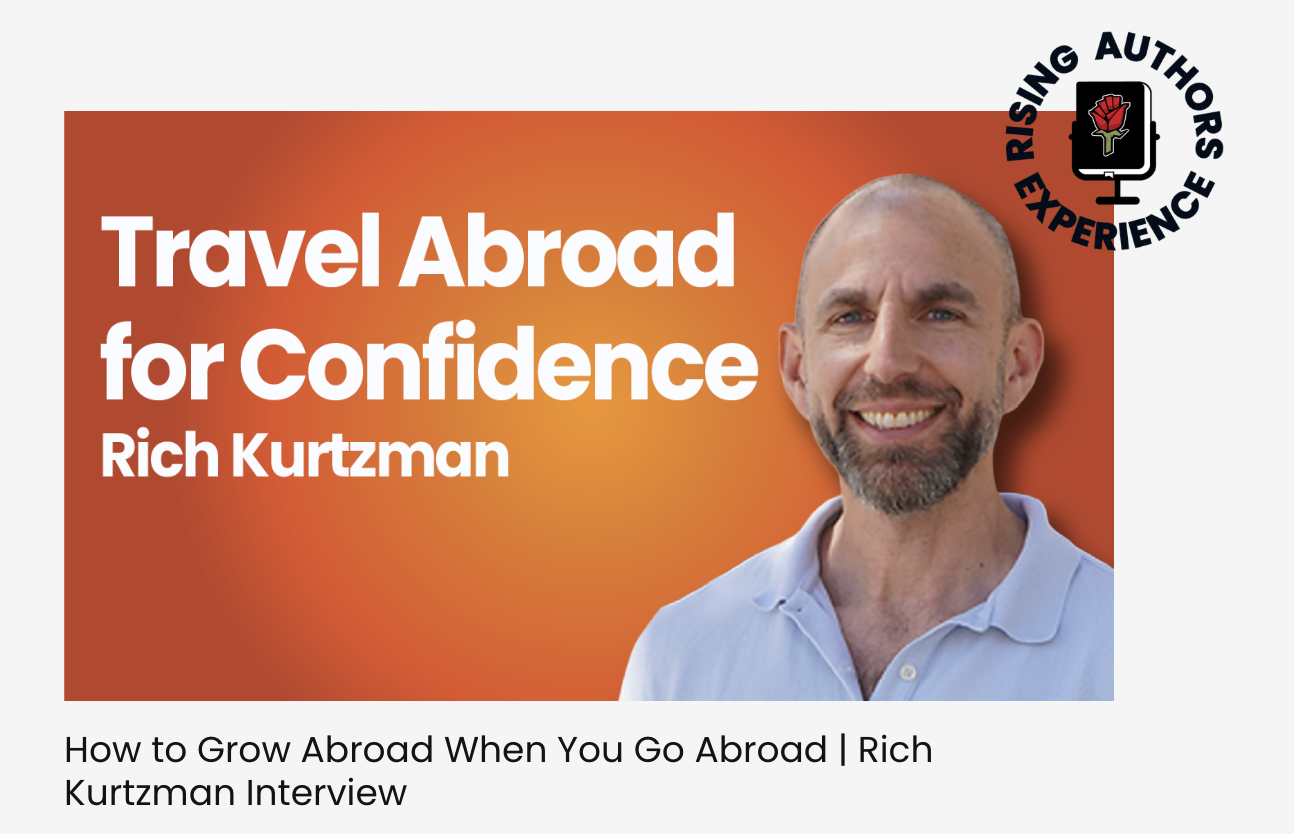
I sit down with my friend Rich Kurtzman , author of Like a Fish in Water: How to Grow Abroad When You Go Abroad and founder of Barcelona SAE, who's spent more than two decades helping students step outside what's familiar and grow in ways they never saw coming.
We get into his first trip abroad in Russia, why Spain changed his life, and how travel reshapes your identity. Then we dig into the book itself: why he wrote it, how it grew his business, how universities now use it with their students, and the part every author needs to hear, that your book is never "done" just because launch week is over. You can watch the episode here.
When You're Ready, Here's How I Can Help
If you're done yelling into the algorithm and you want a message that actually lands, reach out I would love to see where and how we can make you and your work stand out!
Power Pack Pro. Clarify your brand, build your site, and lock down your positioning.
Power Pack Boost. Weekly content strategy, video scripts, lead systems, and real platform growth.
Power Pack Ultra. Publish your book and build your brand. A done-for-you content engine, and full visibility support.
DM me or just reply to this email and we'll build you something real, something rooted in who you actually are. That's the only kind that ever lasts.
Hussein