25 Hooks Every Nonfiction Needs
Here's why you're invisible online.
And I say that not to be harsh, I say it because I have worked with enough authors, coaches, consultants, and speakers to know that most of them are producing real work, carrying real expertise, sitting on ideas worth sharing, and none of it is landing the way it should, not because the work is bad, but because nobody ever taught them how to make someone stop long enough to actually see it.
That is what we are going to talk about today.
I have been on LinkedIn for five years of those five three consistently and I have spent most of that time studying copywriting, not because I wanted to become a marketer, but because I kept watching brilliant people with important books and genuine expertise get completely ignored online while people with half their knowledge were building real audiences and real businesses, and I needed to understand why.
The answer, almost every single time, came back to the same thing.
The first line.
Here is what nobody tells you when you start building your presence online: you are not competing with bad content. You are competing with everything else happening in someone's life at the exact moment your post appears in their feed, their emails, their meetings, their kids, their own thoughts, their coffee getting cold, the seventeen other things demanding their attention right now.
You have about two seconds. That is it. Two seconds for your first line to make them feel something worth interrupting all of that for.
And most people waste those two seconds describing what they are about to say instead of making someone feel something.
That is the whole problem, and it is completely fixable.
Now I want to be clear about something because I think there is a lot of noise around this topic that points people in the wrong direction.
Hooks are not about going viral.
I want to say that again because it is the thing that trips most people up.
Hooks are not about going viral.
Virality is unpredictable, it is often random, and it almost never translates into the kind of audience that buys your book, hires you to speak, or reaches out about consulting. The people who chase virality usually end up with a lot of impressions and very little business.
What hooks are actually about is something far more valuable and sustainable.
They are about staying top of mind with the right people. They are about keeping the specific person who needs your expertise engaged with your thinking week after week, so that when they are finally ready to take the next step your name is the first one that comes up.
They are about attracting the exact person who needs what you know, and making sure that person feels so understood by your opening line that they have no choice but to keep reading.
That is a completely different objective than going viral, and it requires a completely different approach.
Think about the last piece of content that made you stop everything and read it to the end.
It probably did not start with "Here are five tips for." It did not open with your job title or your company name. It did not begin with a disclaimer or a throat-clearing paragraph about what you are about to cover.
It started with something that made you feel something, a line that named a fear you had not said out loud, a statement that challenged something you had believed for years, an observation so specific you felt like someone had been watching you.
That is the work. And it is learnable.
I spent three years collecting, testing, and refining the hook formats that work consistently for the kind of content authors, coaches, consultants, and speakers create, the kind of content designed not to go viral but to build a real relationship with a real audience over time.
What I found is that there are patterns, real repeatable patterns for how to open a piece of content in a way that makes the right person stop.
Some are built around honesty, the kind of blunt, uncomfortable statement that makes someone think this person actually gets it.
Some are built around story, the before and after, the turning point, the confession that makes someone feel less alone in their own struggle.
Some are built around contrast, the thing everyone believes that you are about to challenge, the assumption you are about to dismantle, the conventional wisdom you lived by before you found a better way.
Some are built around specificity, the hyper-direct address to one exact person in one exact situation, so specific that when they read it they feel like you wrote it just for them.
All of them work. None of them require you to be loud, aggressive, or someone you are not. They just require you to be honest, specific, and clear about who you are talking to and what you want them to feel.
And here is the part most people miss entirely.
These formats do not just work for LinkedIn posts.
They work for your website homepage, because the headline on your homepage is a hook and most author and expert websites have weak headlines that describe rather than connect.
They work for your newsletter, because the subject line and opening paragraph of every email you send is a hook and most newsletters lose half their readers before the second sentence.
They work for your book description, because the first line of your Amazon listing and your back cover copy is a hook and most authors write that section last with whatever energy they have left.
They work for your speaker bio, your podcast pitch, your Instagram caption, your YouTube title. Every single place where you need someone to choose to pay attention, the hook is doing the work.
I put my top 25 into a free PDF you can download right here.
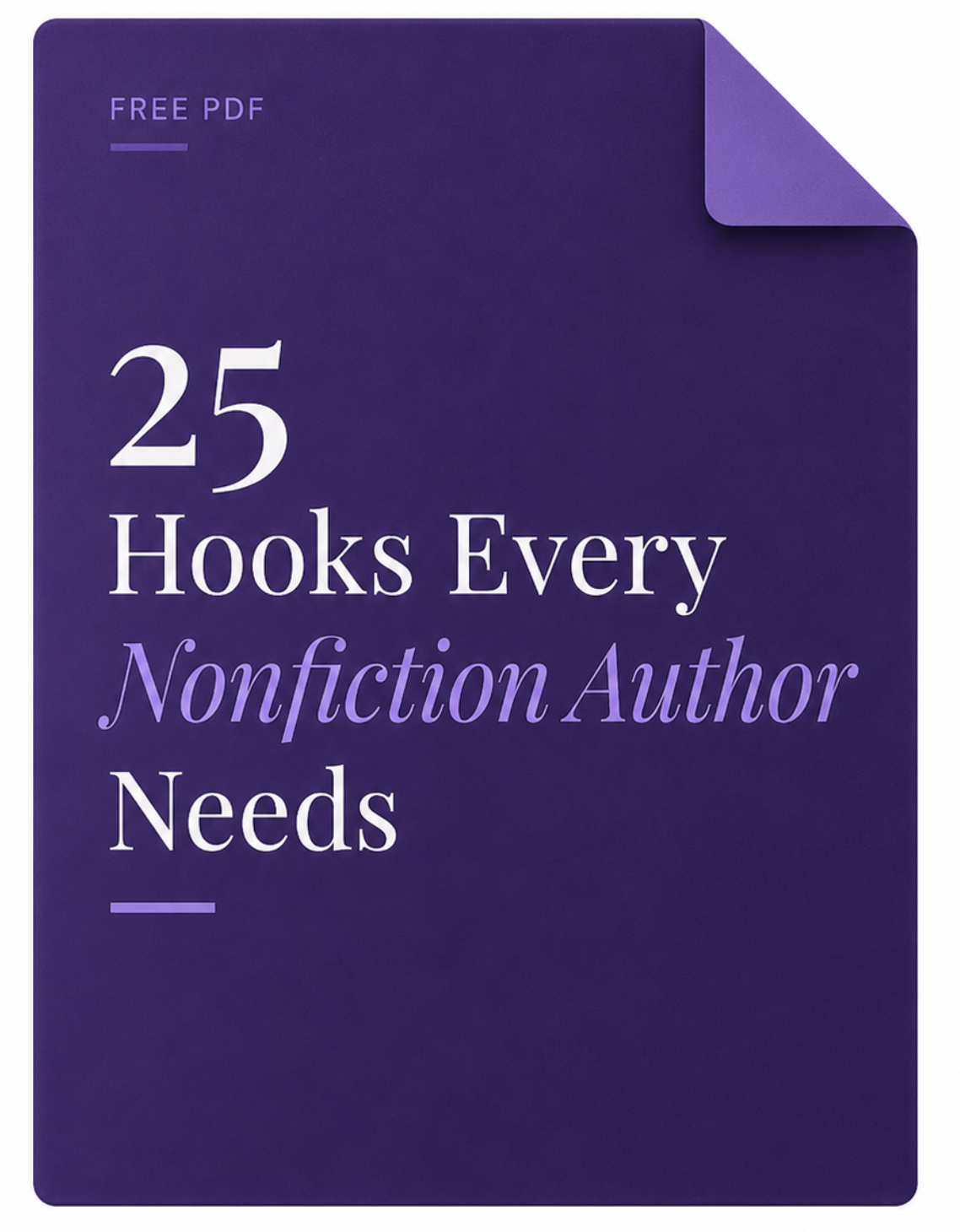
These are not designed to be used all at once. You do not need all 25. You need two or three that feel like yours, that match the way you naturally communicate and the ideas you are genuinely trying to share.
What this guide is really for is two situations.
The first is writer's block. When you sit down to write something and you genuinely do not know how to start, you open this guide, you find the format that fits the idea you are trying to express, and you have a starting point. Writer's block is almost always a hook problem, and a list of formats is the fastest way through it.
The second is when you feel like all your content sounds the same because you have defaulted to the same one or two patterns without realizing it. This guide gives you range. It reminds you how many different ways there are to start a piece of content so you can match the format to the idea instead of forcing every idea into the same format.
I also added a special bonus inside the download that I think you are going to find even more useful than the hooks themselves, so make sure you actually open it and do not let it sit in your downloads folder.
And one more thing before I let you go.
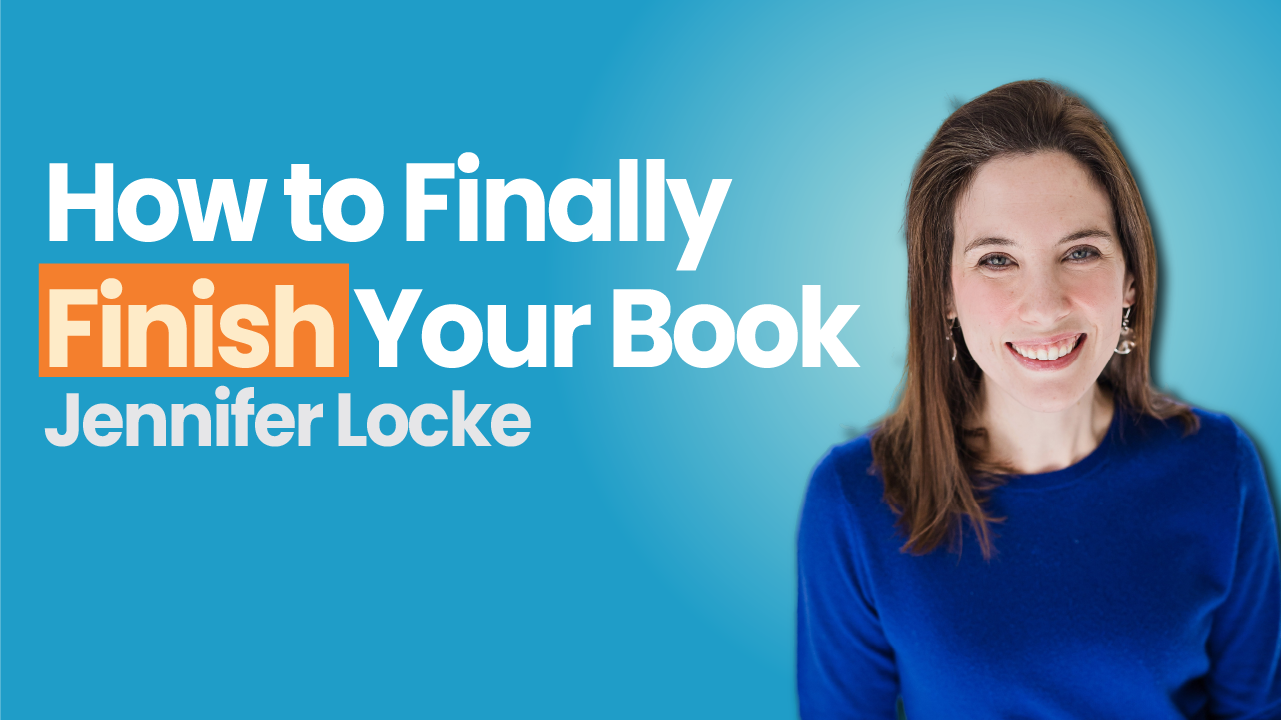
If you are working on a book right now, or you have been trying to finish one and you keep hitting the same wall, I want to point you to a conversation I had with my friend Jennifer Locke all about finally finishing your book, what actually gets in the way, why most authors stall out at the same place, and what it really takes to get across the finish line.
It is one of the most honest conversations I have had on the show and if you are in the middle of writing something right now I think it will hit differently than most writing advice you have heard.
You can find that episode and every other episode of the Rising Authors Experience at rising-authors.com/podcast
And if you want to learn more about what we do, how we help authors, coaches, consultants, and speakers build the kind of online presence that actually reflects the level of their expertise, you can start at rising-authors.com
Hussein